MEJE PROCESS · Fandom Activity (7 chapters)
A Worldview Is Not Content but a Production System
A Worldview Is Not Content but a Production System
Keeping Text, Illustration, Video, and 3D from Scattering Away from One Source
A request that begins "please build us a worldview" usually ends in a thick lore bible. It is made with care, draws admiration at the presentation meeting, and goes into a drawer. Six months later the new staffer does not know the document exists, the outside production partner receives a summary of a summary, and the new music video subtly contradicts the lore bible. As long as the worldview is treated as content — a finished document — this ending repeats.
In Fandom Activity, the definition of a worldview is different. A worldview is not a document to read but a production system that keeps many people and many media continuously creating the same world. This installment covers how that system works.
1. A Lore Bible Starts Aging the Moment It Is Finished
The difference between a lore bible and a library was covered in part 2, but it bears repeating from the production perspective. A lore bible is a snapshot frozen at a point in time. From the moment a new album comes out and a new symbol is born, it begins to diverge from reality. A library, by contrast, is a living structure of entries, links, and histories. New information becomes a new entry, changed lore is updated with its change history, and even discarded ideas remain along with "why they were discarded."
The first condition of a production system is this: the source of reference must always be current, and always singular. The moment the source scatters into multiple versions, the productions scatter with it.
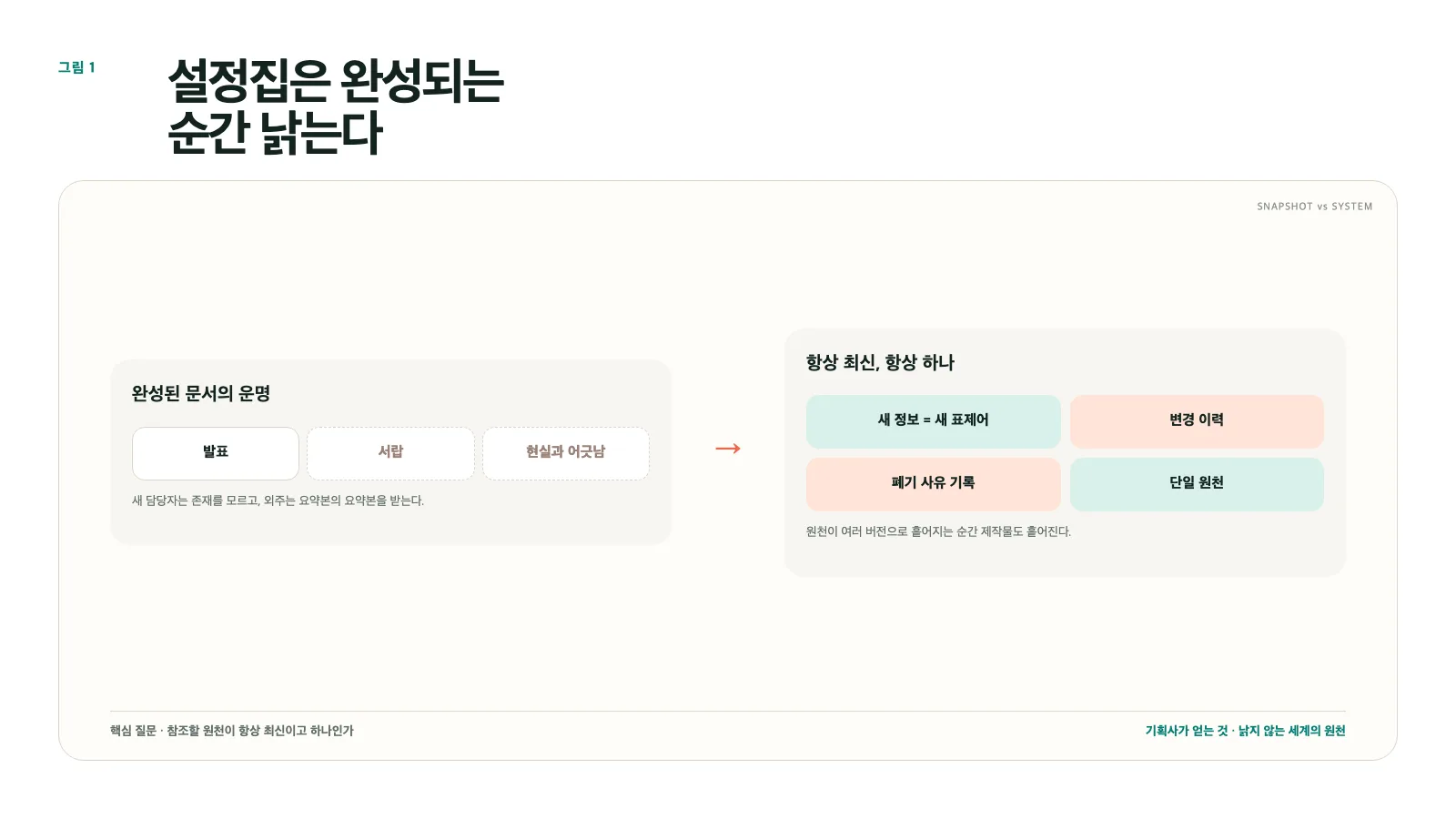
Figure 1. The snapshot lore bible and the living library: updates, history, discard rationale
2. Every Medium References the Same Source
The system's second condition is a common source. The webtoon artist, the video team, the 3D modeler, and the merchandise designer all reference the same entries and the same rules. For text, the world's facts and speech patterns; for images, the specifications of color, material, and lighting; for video, the grammar of camera and movement; for 3D, the specs of models and animations — all issue from the same root.
Then, even when different production partners work simultaneously, the results read as one world. Without a common source, each medium draws the world slightly differently through its own interpretation, and fans are the first to notice the misalignment. Transmedia succeeds or fails not on imagination but on the structure of reference.
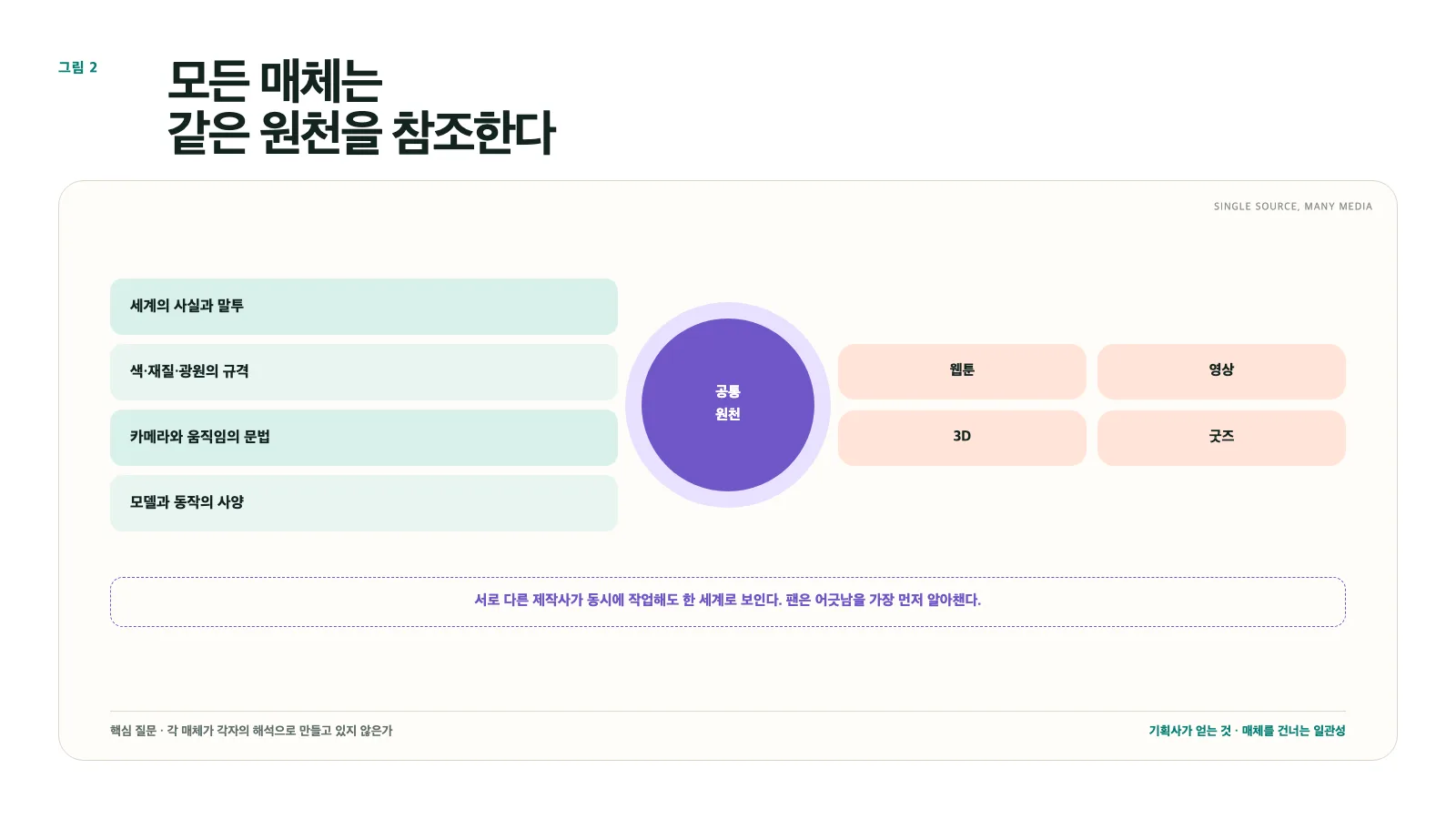
Figure 2. Common source reference: text, illustration, video, 3D, and merchandise from a single root
3. The Season Capsule: Swap In, Don't Rebuild
Building the world anew for every comeback is waste, and changing nothing is stagnation. The answer is incremental renewal. The world's skeleton — characters, places, rules, relationships — is maintained, while the new album's colors, materials, props, movements, and short phrases are organized into a "season capsule" and swapped in. When the capsule loads, the world's expression changes the way seasons change over the same village.
The capsule approach pays off in speed and accumulation. Producing a new season requires only a capsule's worth of work rather than a whole world, so it gets faster, and past capsules do not disappear but stack up as the world's history. Fans gain the sense that "this world is growing older along with our promotions." This is the production side of "the same engine, a new content capsule" described in part 1.
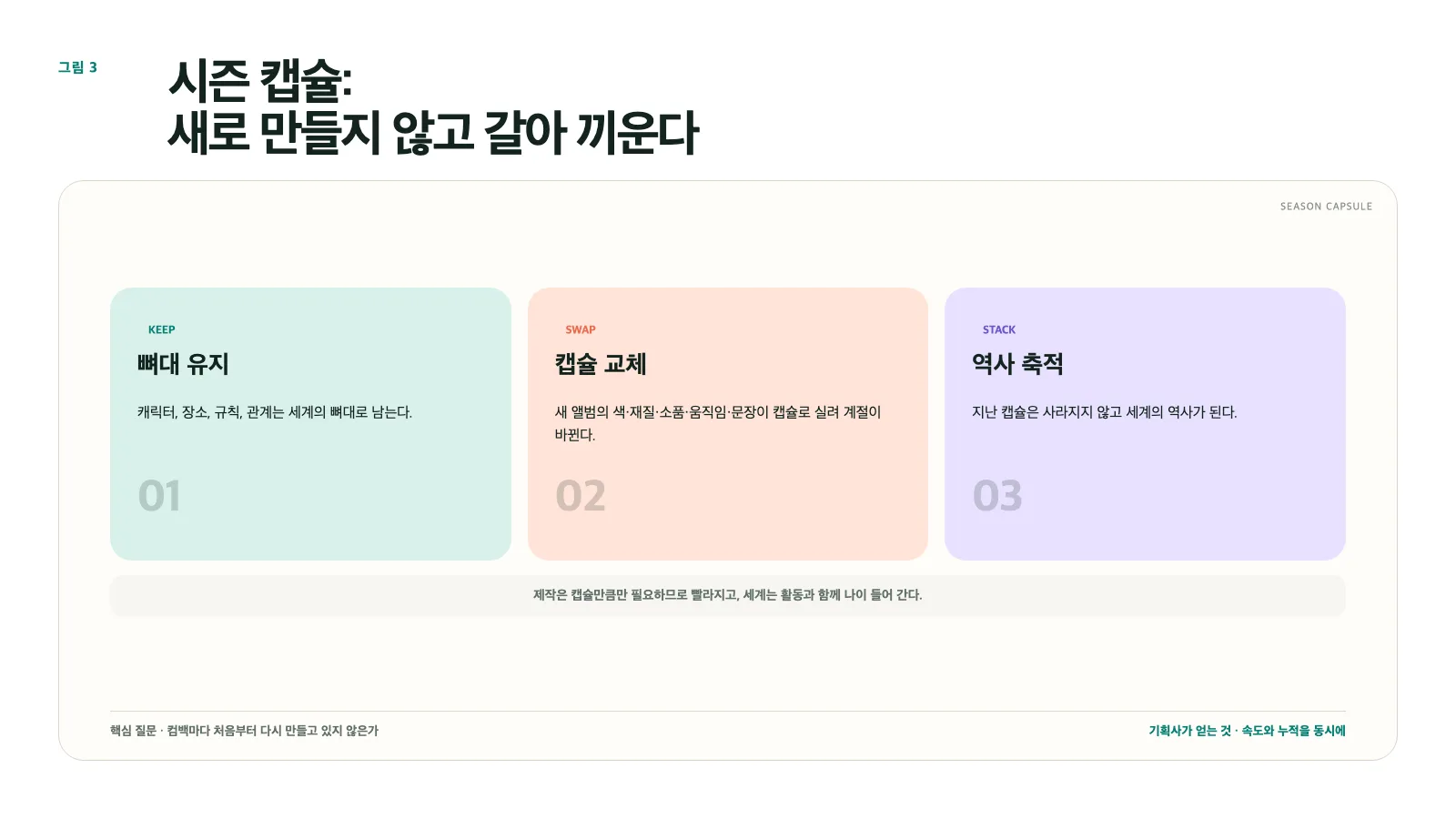
Figure 3. The season capsule structure: keep the skeleton, swap only the season, accumulate the history
4. Translation Devices for Brands, Outsourcing, and Global Operations
The production system is not used only internally. Collaborating brands receive a one-page brief carrying the world's tone and red lines, and outside production partners receive documents in graduated depths — from summary brief to source entries. What once required explanatory meetings each time is handled by the document system, so the startup cost of collaboration falls.
In global operations, localization becomes possible rather than mere translation. When each language region's fandom grammar and taboos are documented in the library, the whole team can judge consistently which expressions to carry over and which symbols to leave without explanation. And the schedule system is managed at the world level so that fans in every language region experience the same event on the same date.
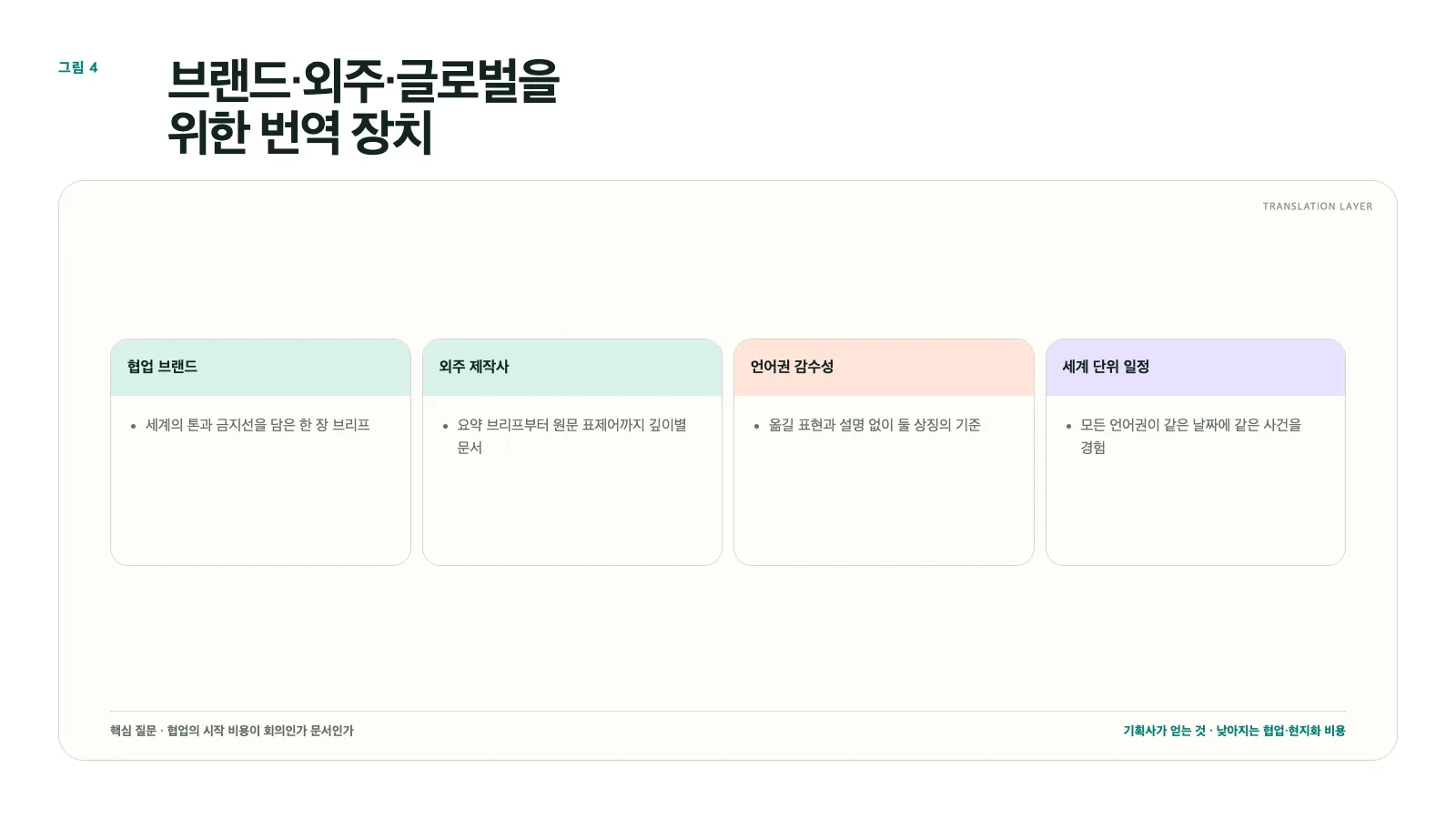
Figure 4. Translation devices: the one-page brief, graduated-depth documents, and language-region sensitivity guides
5. AI Orchestration and Human Approval
On top of this system, generative AI becomes an amplifier. In text, AI rapidly produces source summaries, drafts, and translations; in images, part variations and background versions; in video, storyboards and cut variations; in 3D, modeling assistance and texture variations. But which candidates enter the world is always a human decision. Only what passes approval on four criteria — fact verification, fandom sensibility, design original form, and rights — is admitted into the library.
So production rules are engraved into the system alongside it. Every output carries a record of its source material, prompt policy, version, and approver, and banned-term lists and rights tags operate from the generation stage onward. The faster AI gets, the more these rules are worth. Speed without rules only multiplies the world's contradictions faster.
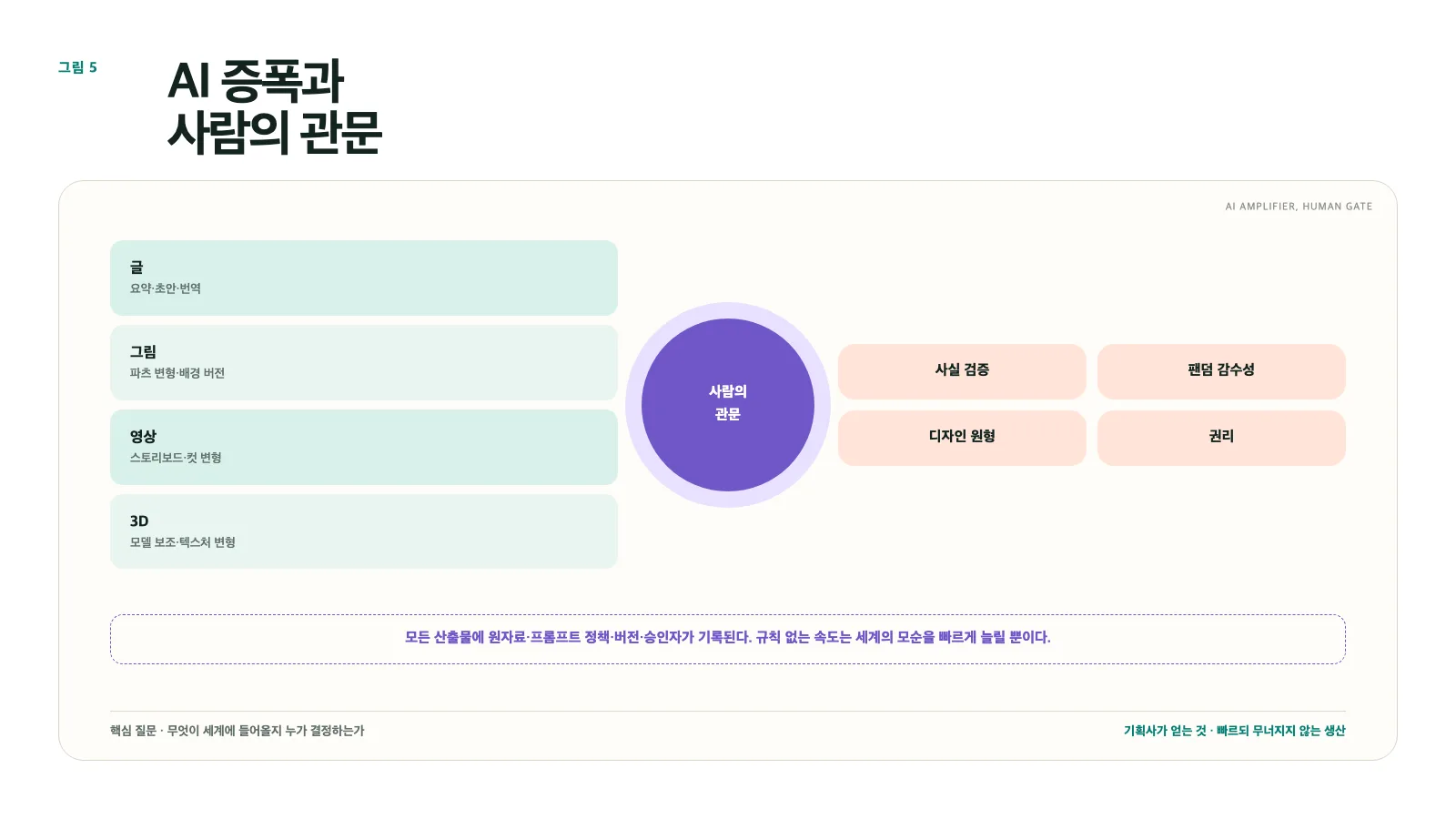
Figure 5. AI amplification and the human gate: fourfold approval on verification, sensibility, original form, and rights
6. How to Slow the Depreciation of an IP
Content loses value from the moment it is consumed. But a system moves in the opposite direction. As seasons repeat, the library thickens, the character guide grows more precise, capsule production accelerates, and fan response data informs the next judgment. The box-office fortunes of individual content rise and fall, but the capacity that produces it trends upward.
This is the production-side substance of MUOS — the structure in which multi-use strengthens the one source — described earlier. The reason to multiply media is not only to multiply revenue streams; it is that every use flows back to the source and makes the world sturdier. Only a company that has built its worldview as a production system enjoys this compounding.
Yet the last link of this cycle — "fan response data informs the next judgment" — is widely misunderstood. The misunderstanding is that data competitiveness comes from tracking fans more. The next installment, "Data Can Be a Competitive Edge Without Surveilling Fans," takes this problem head-on.
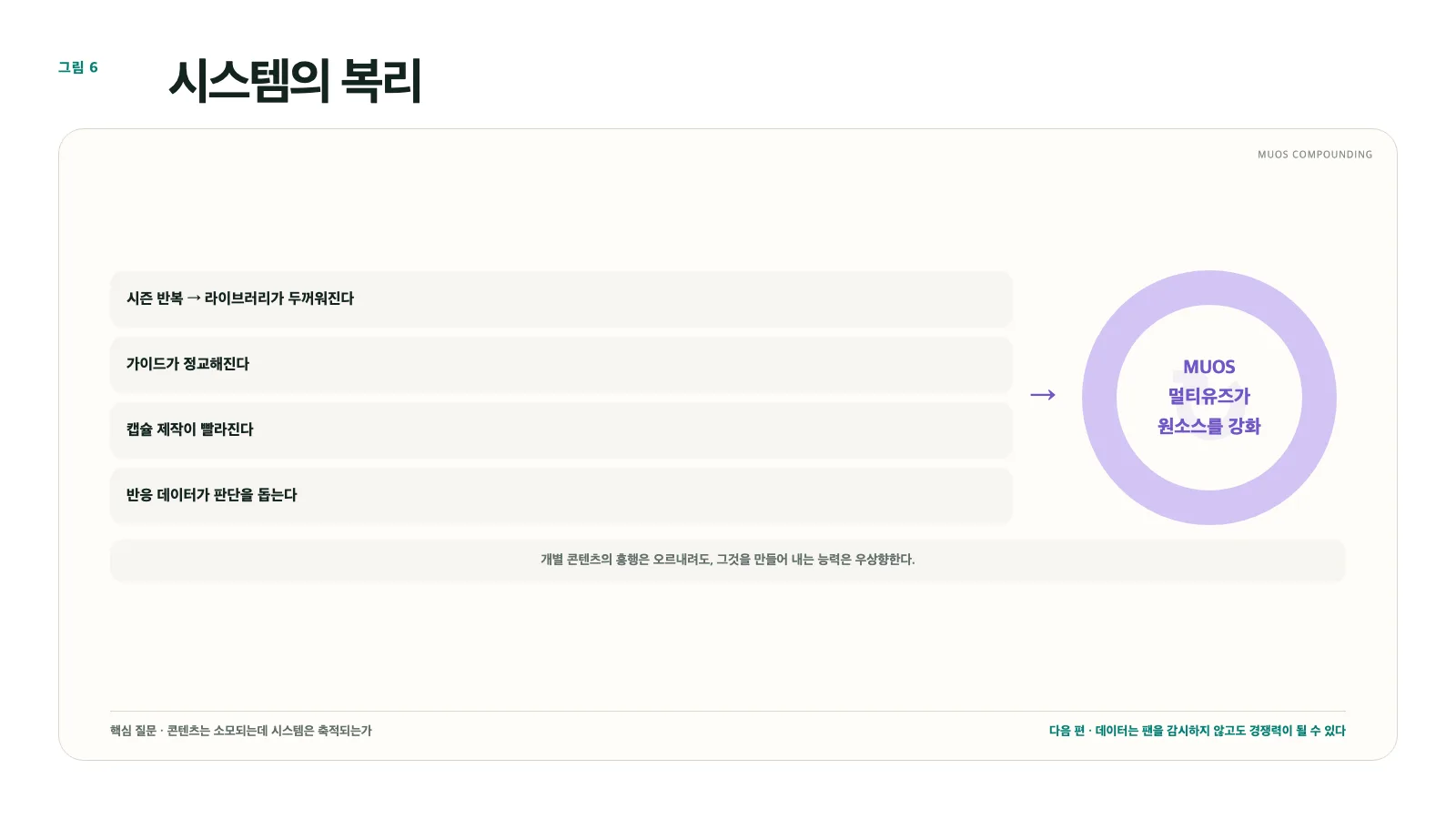
Figure 6. The system's compounding: production capacity that grows faster and sturdier as seasons repeat
MEJE WORKS, the team writing this series, is a content team that designs and operates worldviews, characters, and Fandom Activity for idol IP. Fandom Activity is an operating system that turns idol IP into "a world fans live in every day," and this series is laying out the method piece by piece. Additional materials for collaboration review and on-site briefings are available on request at any time.