MEJE PROCESS · Fandom Activity (7 chapters)
Fandom Doesn't Wait
Fandom Doesn't Wait
Fandom Activity: Turning Idol IP into "a World Fans Live in Every Day"
One a.m., and a fan's day is not over yet. The last comeback promotions ended months ago, but tonight she is once again rewatching cross-edit videos of past stages, cropping a favorite scene into a phone wallpaper, and leaving a comment on a post that catalogs outfits and props. Even in a season when the official schedule shows nothing at all, the fan's world moves like this every day.
An idol's time is usually recorded as a series of points. Debut, comeback, music shows, fan meetings, concerts. Those points are intense, but between them stretch long blanks. Fans keep talking, editing, collecting, and interpreting in those blanks. Yet the official experience an agency provides drops off sharply the moment a promotion cycle ends. The fan's time continues, but the IP's operating hours stop.
We call this mismatch the "hiatus problem." The solution is not simply to post more content. Supplying new videos and photos every day requires a continuous stream of artist shooting time, likeness rights, production budget, and review staff. Worse, when content is scattered across platforms, the responses scatter with it into platform-specific view counts and comments. When the next comeback comes around, the company falls back on instinct and memory once again.
What is needed is not a volume of posts but a connective structure. A structure in which symbols born from an album become the rules of characters and a world, those rules flow into fans' daily actions and weekly events, and the aggregated, interpreted responses return as hypotheses to be tested in the next album. We call this Fandom Activity.
1. Turning the Gap Between Albums into a "Season"
The conventional promotion cycle is close to linear. After a long preparation, the comeback arrives, everything is concentrated into a short burst, and then official touchpoints shrink during the next preparation period. From a marketing perspective, the hiatus is a stretch where traffic cools. From the fan's perspective, it is a stretch of waiting. But fandom culture does not actually stop that way. Fans rewatch past stages, categorize outfits, interpret relationships, make memes, and imagine the next promotion. Even while there is no official content, the unofficial world keeps moving.
This problem has grown larger alongside shifts in the industry's terrain. Physical albums now account for around 5% of global music revenue. And yet fans without CD players buy albums by the hundreds of thousands. The album long ago became an object to own and experience before it is a medium to listen to, and in the disclosures of major Korean agencies, revenue outside albums and concerts — merchandise, content, fan clubs — has grown to roughly 40% of the total. In surveys, eight out of ten fans say they have experienced paid fandom activities. Fans want experience and narrative participation beyond ownership, and that demand does not pause during album hiatuses or military-service hiatuses. Yet in a market where around 50 teams debut each year, only a handful of agencies have the large platforms and dedicated organizations to answer it.
Fandom Activity declares this time a season. When album A is released, its colors, materials, props, movements, and messages create the environment of season A. Fans enter that world for a few minutes a day, meet the characters, leave one action, and change their collections and spaces. In weekly updates, outfits or stage objects from actual promotions are recreated in an approved way, and in monthly events, the fandom's small contributions gather into a shared occasion. When album B arrives, a new content capsule is swapped onto the same service engine.
What matters here is not the number 100 itself. It is that the time between one album and the next is designed as a span with a beginning, change, and an ending. For fans, the hiatus stops being "a wait with nothing in it" and becomes a season for fully living out the previous album and crossing over to the next. For the agency, it creates a foundation for operating promotion periods and hiatuses not as separate campaigns but as one continuous IP cycle.
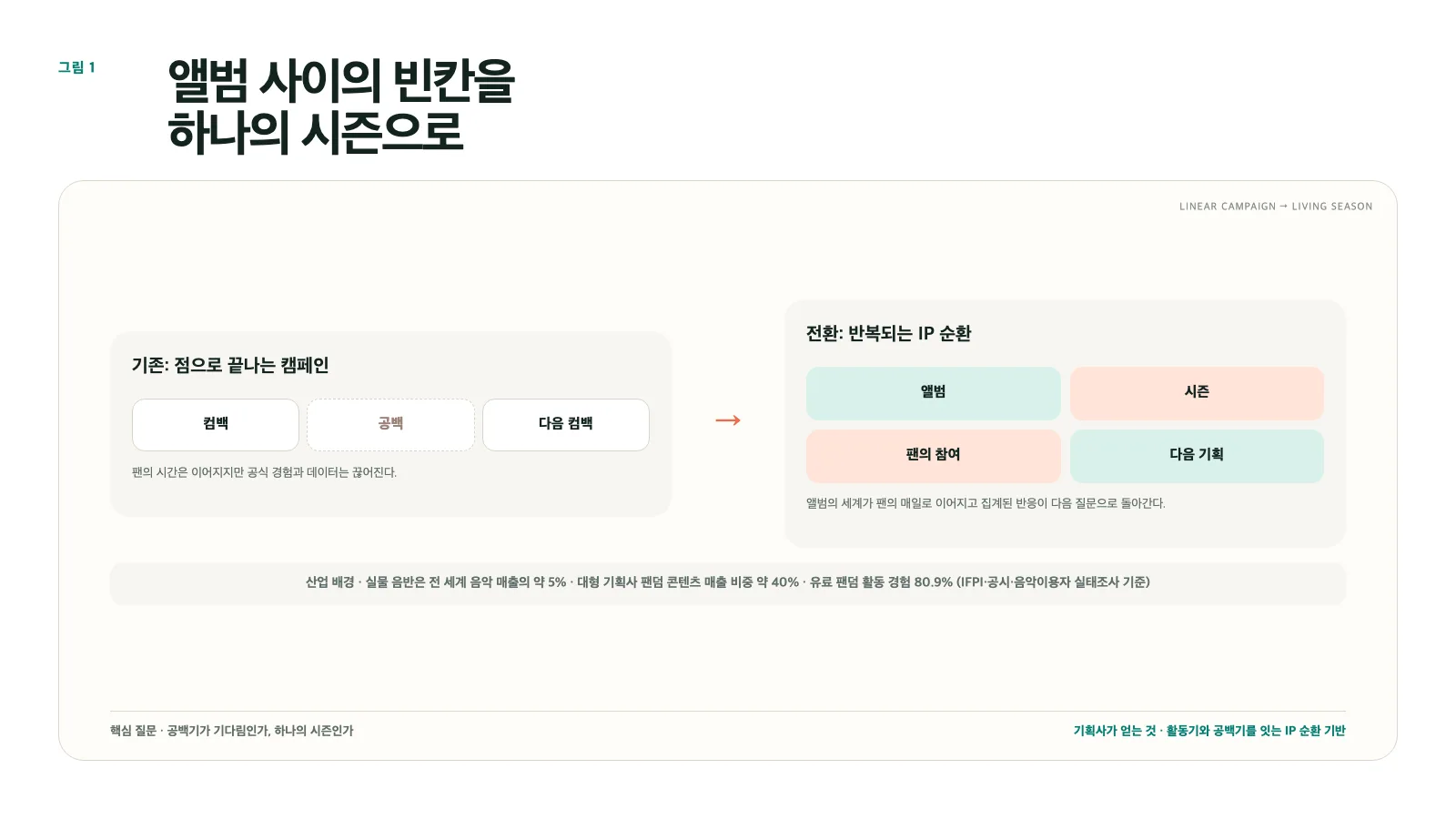
Figure 1. The difference between a promotion-centered linear campaign and season-based Fandom Activity
2. Fandom Activity Is Not a Game but a "Content Operating System"
At first glance, Fandom Activity is easy to mistake for a character game or a fan platform. There are characters on screen, along with decorating, collecting, minigames, and events. But the features visible on screen are the final part of the whole system. In front of them sit fandom knowledge collection, the worldview library, character rules, rights review, and seasonal content production. Behind them sit operations logs, fan response analysis, and hypotheses for the next season and the next comeback.
So the more precise definition is this. Fandom Activity is a comprehensive content-data solution that collects and structures the scattered knowledge of an idol and their fandom into worldview and character IP, operates it as season-based participatory content, and connects the aggregated, interpreted behavioral data to hypotheses for the next content and to business decisions.
For short, remember it this way. Fandom Activity is an operating system that turns idol IP into "a world fans live in every day."
Accordingly, Fandom Activity is none of the following.
- It is not a one-off minigame hastily filling a hiatus.
- It is not a service that replicates the boards and messaging features of existing fan platforms.
- It is not a product project that swaps members' faces onto characters, delivers them, and ends.
- It is not a loyalty game that tests fans' affection with logins, spending, and rankings.
This definition carries three identities at once. First, consulting. It diagnoses the group's existing lore, fandom sensibilities, rights structure, promotion cycle, and internal production capacity. Second, a solution. It builds assets that are actually reused — wikis, relationship maps, lore bibles, character sheets, design guides, and the IP concepts, physical goods, data, and content resources produced in the course of operations. The web screens and operations tools are the environment for creating and testing those assets. Third, an experiment in the future content industry. It builds a production system in which candidate variations for text, illustration, video, voice, 3D models, interaction, and merchandise are derived from a single approved world dataset and refined through human verification.
That is why the success of Fandom Activity cannot be judged by "is the game fun" alone. One must ask together: do fans have a reason to come back, does knowledge remain that helps the agency produce better next time, can the characters expand into other media, and does the operational data raise the quality of the next decision.
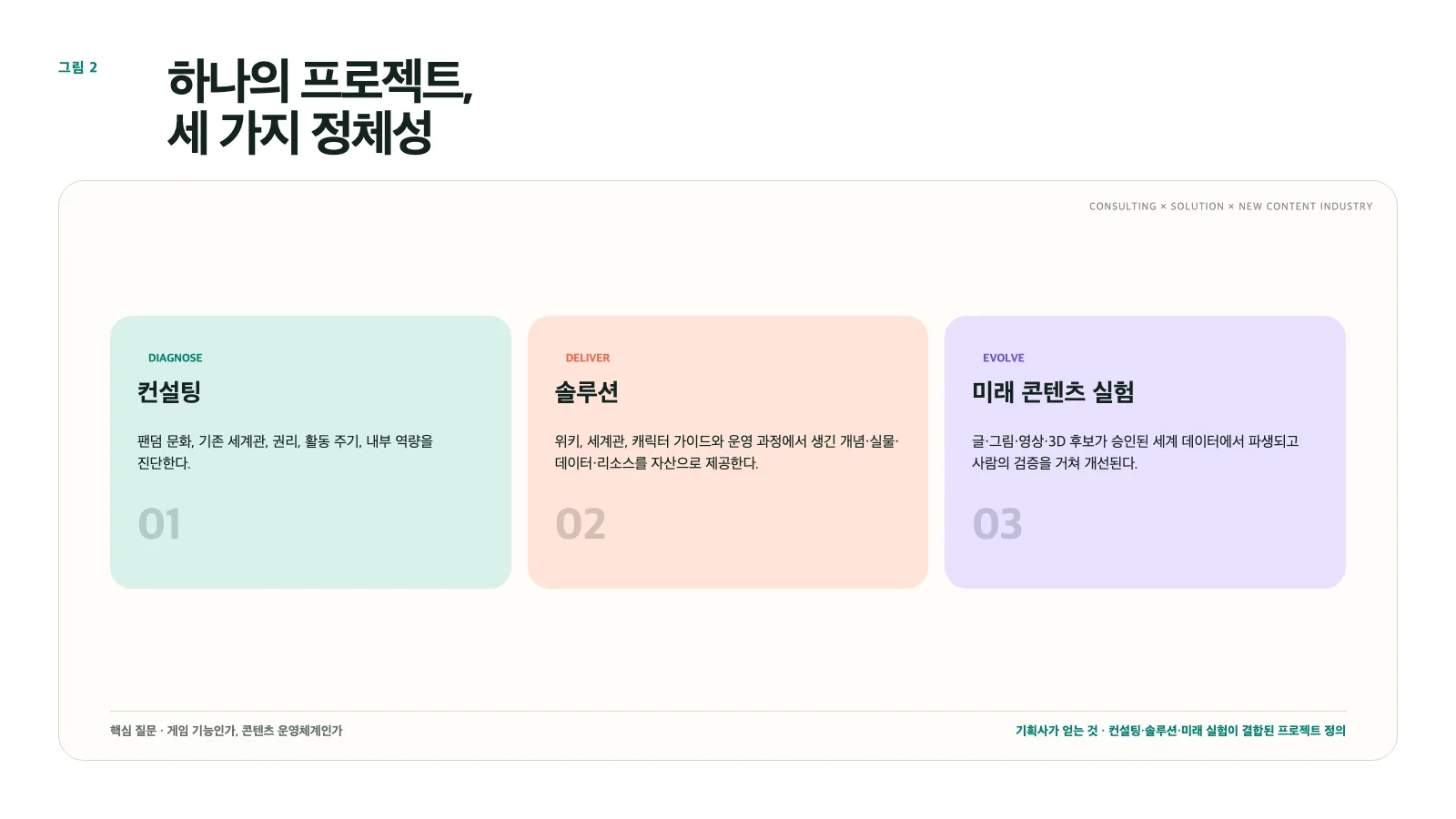
Figure 2. The three identities of Fandom Activity: consulting, solution, and future content experiment
3. Five Things the Company Secures: The B2B IP Asset System
The first engine of Fandom Activity operates inside the company. Synthesizing multiple IP proposals and operating cases, the results this engine produces and delivers can be organized into five interconnected asset areas.
The first is fandom culture research and structuring. Beyond the official profile and discography, it surveys the nicknames fans repeatedly and publicly use, memes, the grammar of relationships, memorable stages, symbols, and props. This is not, however, a matter of scraping up rumors and private lives. It respects platform policies and quotation limits, and attaches original source, date, context, official status, evidence level, and sensitivity. It does not privatize the fandom's public expression as free raw material; it turns it into research assets meant to be returned as a more accurate and more respectful official experience.
The second is the worldview library. People, places, events, objects, symbols, albums, and stages become entries linked to one another. Official facts, fandom interpretations, and as-yet-unverified creative hypotheses are kept distinct. When the relationship map is visualized, the philosophy and mise-en-scene the group has repeated over the years become visible. It is not a single lore bible but a production database referenced jointly by the marketing team, A&R, the visual team, and outside production partners.
The third is cross-production of the real and the fictional worldview. It connects the real idol's activities and the fictional characters' world under the same philosophy, without letting the two fully overlap. It builds a "dual-discovery structure" in which fans recognize the origins while non-fans see independent characters and objects. This structure is the buffer that creates a world meaningful to fans without directly replicating the members.
The fourth is the character and transmedia design guide. It does not stop at a front-facing illustration of each character; it specifies silhouette, proportions, expressions, behaviors, relationships, outfits, background parts, materials, prohibited expressions, and even 3D models and shared animations. Only then do emoticons, plush dolls, webtoons, animation, short-form video, games, and licensed products avoid scattering into what look like different characters.
The fifth is the operational fandom IP asset. Here, what the B2B offering provides is not the web service or the act of operation itself. The service and its operation are a creative environment that puts the four preceding assets to work within fans' time while planning, testing, and accumulating new IP. In the process, it produces new worldview concepts and activity formats, character outfits and props, cards, posters, limited physical goods and prototypes, resources for stories, illustration, UI, and 3D, and aggregated, interpreted fan-response data with season reports. What the agency receives is not a single login screen but an organized asset bundle of IP concepts, physical goods, data, and resources ready to be reused in the next content and products.
The competitive advantages these five assets support are concrete. Organizational memory survives staff turnover, outsourcing briefs and production scoping get faster, and consistency across media improves. Content emerges that does not depend solely on new shoots and artist schedules. Above all, what remains at the end of a campaign is not a deliverable that disappears but IP infrastructure reusable for the next comeback and the next business.
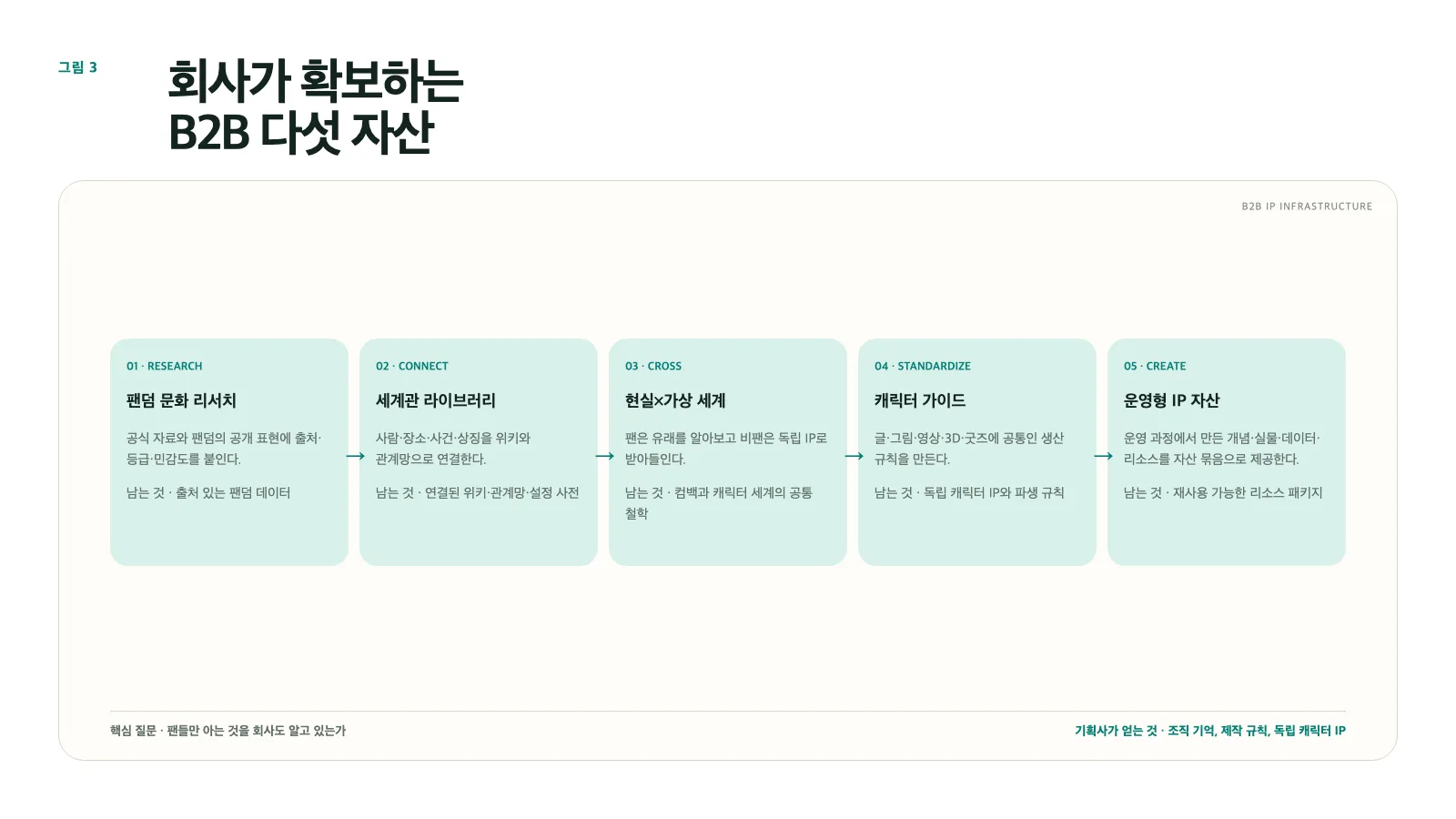
Figure 3. The five B2B assets: culture research → library → cross worldview → character guide → operational IP asset
4. Five Things Fans Gain: The Time Rhythm of B2C Content
The second engine operates inside fans' time. Fandom Activity designs when things happen more than what kinds of content exist. The five items below are not mutually exclusive content genres but layers of time — daily, weekly, biweekly, and monthly cadences nested within a single season.
The first is the season. It binds the span between one album and the next into a single complete experience. Early in the season, the agency presents the world and its central object like an official gift. In the middle, fans' choices accumulate in spaces and records, and in the later stretch, individual outcomes meet in shared exhibitions or events. After the finale, a personal edition and a season archive remain.
The second is the daily routine. One core action takes only 30 seconds to 3 minutes. Greet, take a walk, place one piece, listen to a short story, wrap up the day's record. The essential principle is no-punishment. Skipping a day does not make the character sick or lower the relationship. Because fans' affection is never tested by attendance streaks, they can keep coming back for far longer.
The third is the weekly update. It creates predictable talking points — one event, one outfit or space update. When the outfit and props from this week's stage enter the character's world, the emotion of the promotion period carries over into hiatus content. Decorating results and shareable cards become the material with which fans express their taste and start conversations in the community.
The fourth is the biweekly collection. The group's distinctive devices and symbols, stages, habits, and fandom language are translated into objects and record cards. Collectibles do more than raise a number in a catalog; each one changes the space's appearance, its function, or the personal record. The time a fan has spent takes on form, and what gets displayed and shared most becomes the evidence base for merchandise and character expansion.
The fifth is the monthly world expansion. New zones, large events, and turning points in the season's narrative open up. Even fans who do not come every day get a big reason to return. The participation of the whole fandom enriches the shared landscape, but failing a goal never blocks an individual's ending. What matters is not competition but "the scene we left together."
[Hypothetical scenario] Week two of a season. The following is a fictional example constructed for illustration. On the morning of day 8, a fan spends three minutes greeting the character, choosing a walking course, and placing today's piece in the space. On day 9 she does not log in, and nothing happens. On the evening of day 10, hearing that the jacket from last week's stage has entered the character's wardrobe, she comes in, decorates the room, and posts a share card to the community. On day 14 the biweekly collectible, a record card, unlocks, and when she displays it, the view outside the space's window changes. On the calendar, the first communal event at month's end is already announced.
When the daily, weekly, biweekly, and monthly clocks overlap, content becomes not a random supply but a dependable rhythm of life. Activating a fandom is not a technique of sending more notifications; it is the result of operations that keep the promises fans can comfortably return to.
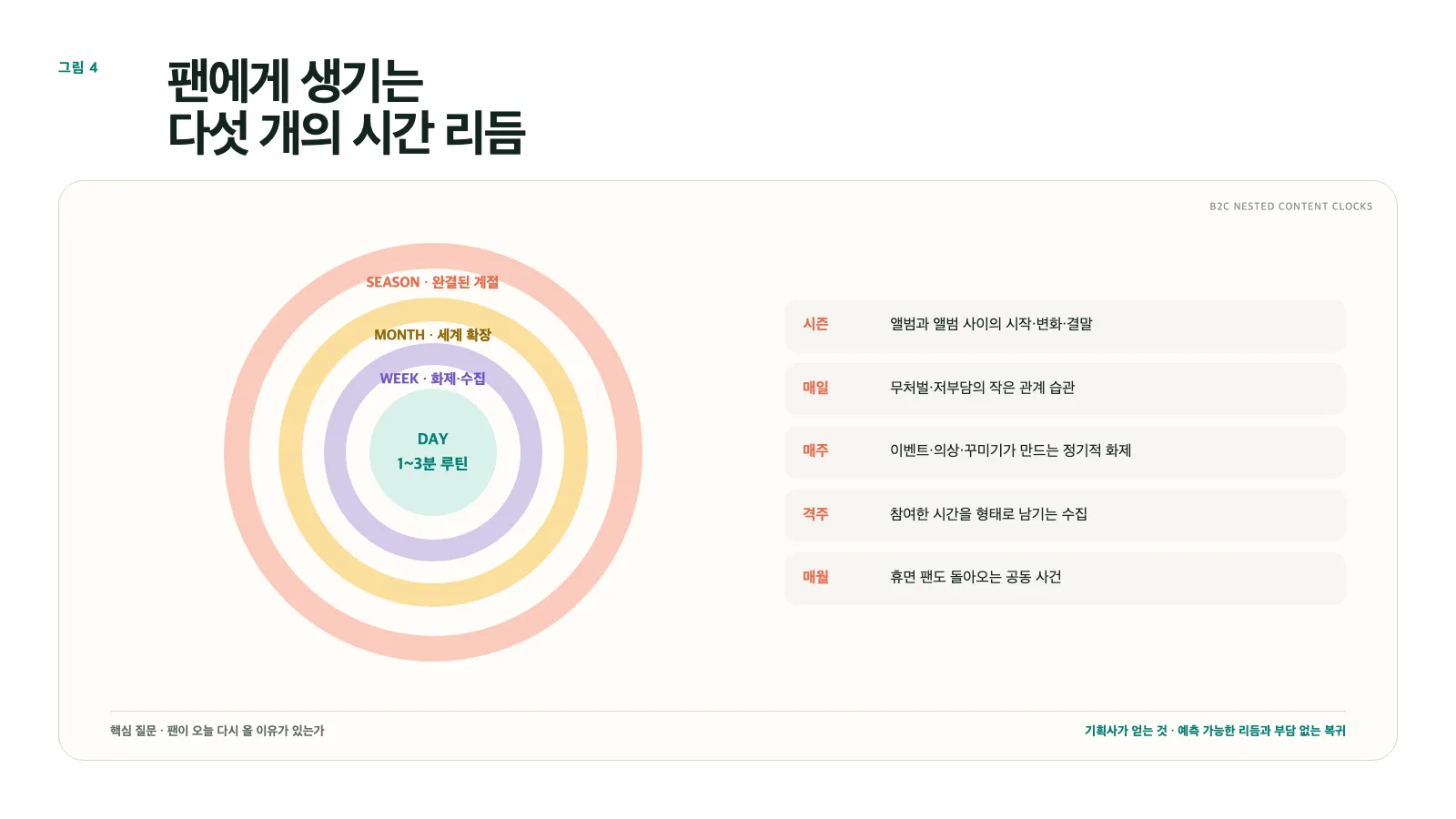
Figure 4. The five B2C rhythms: daily, weekly, biweekly, and monthly clocks nested within a season
5. What AI Produces Is Not Images but "the Capacity to Produce a Consistent World"
This project is a future industry not merely because it uses AI. Generating a few images with generative AI is no longer special. The real change is the ability to continuously produce and update text, illustration, video, voice, 3D models, and interaction from a single approved knowledge base.
The people, places, events, and symbols of the worldview library become knowledge a language model can search and combine. The silhouettes, colors, materials, expressions, and prohibition rules of the character design guide become the boundaries for image generation and 3D variation. An album's colors, props, movements, and short phrases become a season capsule, converted into candidates for short-form scenes, character outfits, in-game collectibles, and merchandise patterns. Humans verify sources and rights, then select, refine, and approve the candidates. This is how one source flows into many media while still reading as the same IP.
But AI is not a tool that produces better the fewer rules it has. Fandom information without sources produces plausible errors, image generation without a design guide turns the character into a different being every time, and video variation without defined rights scope amplifies likeness, master-recording, and lyrics problems. The more AI lowers production costs, the more source tracing, version control, banned-term lists, rights tags, and approval histories matter.
Nor does the human role disappear. AI summarizes material, attaches tags, and generates candidate variations. But which symbols respect the fandom, what suits the group's next chapter, and which expressions are legally and ethically permissible are decisions people make. The AI in Fandom Activity is not a button that replaces creators; it is closer to a coordination system that lets planners, designers, developers, and operators work on the same world model and shared production rules.
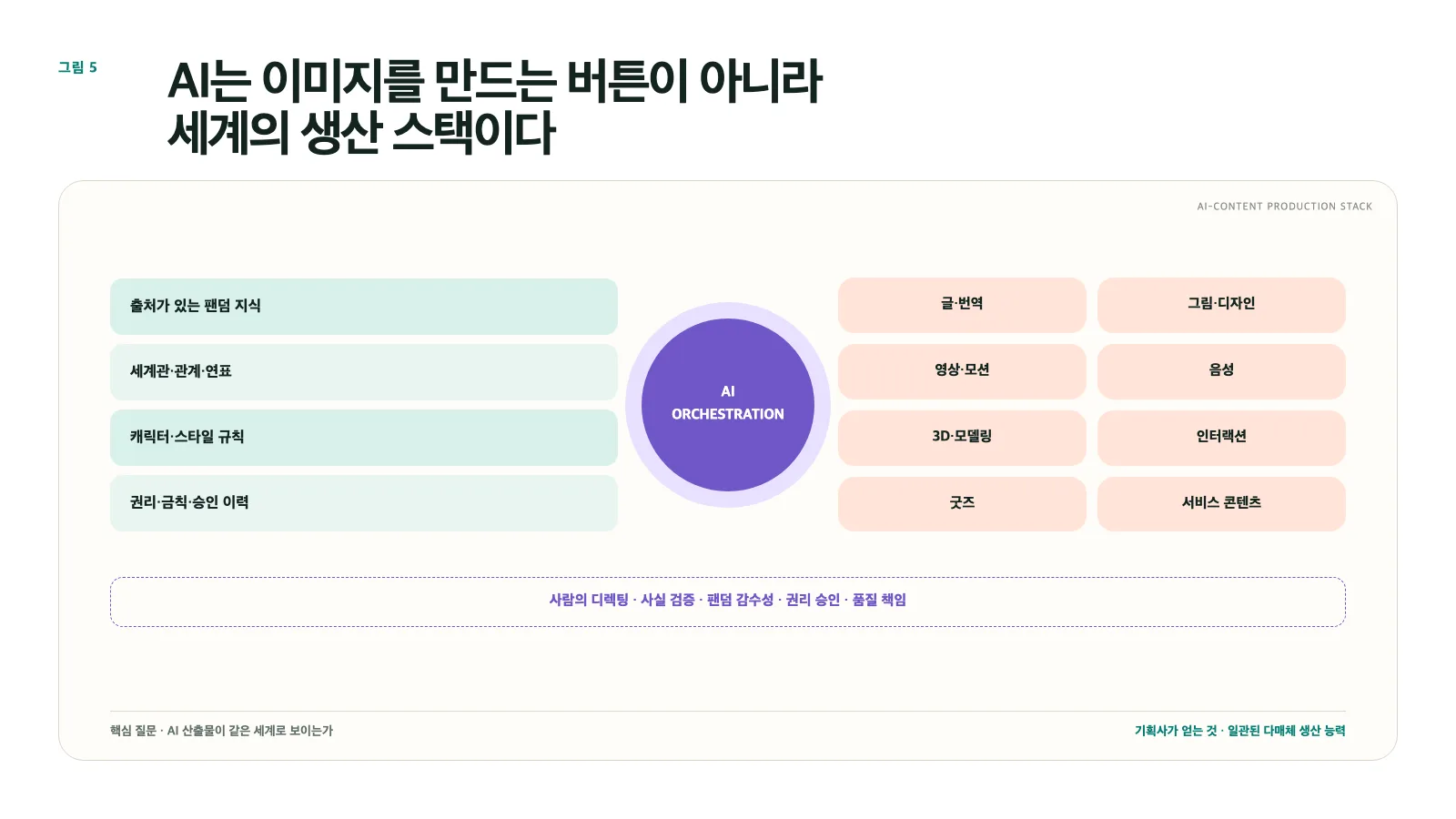
Figure 5. The AI content production stack extending from the knowledge source into text, illustration, video, voice, 3D, and interaction
6. Fan Behavior Becomes the Next Comeback's Questions
Agencies already look at plenty of data. Streaming, albums, video views, social reactions, merchandise sales. But existing metrics alone make it hard to follow the context — the sequence of choices fans made inside the world on the way to an outcome. Fandom Activity observes, within the necessary scope, what fans choose, repeat, and share, and makes the next questions more concrete.
Which expression of which character was saved most. Which stage outfit's release week saw returns increase. Which collectibles were displayed and shared more than they were acquired. Which language regions read a particular story to the end. At which step of the daily routine fans felt burdened, and how many returned after the monthly event. This data does not automatically decide the next album's concept. Instead it produces better questions. Which symbol should be grown, which character should be tested as merchandise, which region should get which format of content translated first.
Two kinds of data are never mixed here. Public materials and the fandom's public expression are research data, governed by platform policies, sourcing, quotation limits, copyright, and sensitivity. Visits, choices, collections, shares, and returns inside the service are first-party behavioral data, governed by notice and consent, minimal collection, aggregation, and retention limits. Their purposes and management principles differ.
The cycle runs like this. Source-verified material is refined into knowledge, and from that knowledge the worldview and character rules are built. From the rules, seasonal content is produced and operated. Behavior is aggregated and interpreted, people review context and bias, and the hypotheses and priorities for the next content are set. Only verified and approved results are written back into the library. Knowledge becomes content, content generates behavioral data, and behavioral data — passed through human verification — becomes the next question.
In our self-measured internal operations, 41% of first-time visitors converted to everyday visits, daily revisits averaged 23 times, average daily time spent was 1 hour 2 minutes, and IP-related community posts rose 177.6%. Access continued from 43 countries and the service supported 39 languages. There were scenes beyond the numbers too. Fans knitted dolls resembling the characters, baked cookies, drew short comics, and posted them to the community. One review read, "This world brought me a little happiness." Still, both idols and games are, at their core, hit-driven businesses. Because outcomes vary widely, these figures are not a guarantee for a new project but targets and forecasts to validate in a pilot alongside first-action completion, burden-free return, collecting, displaying, and sharing, and late-season retention. Data competitiveness does not come from tracking fans more. Aggregate patterns must take priority over individual identification; minors, sensitive information, private lives, and rumors must be excluded; and only the necessary behaviors should be collected, minimally. A world that turns fans into surveillance targets does not last.
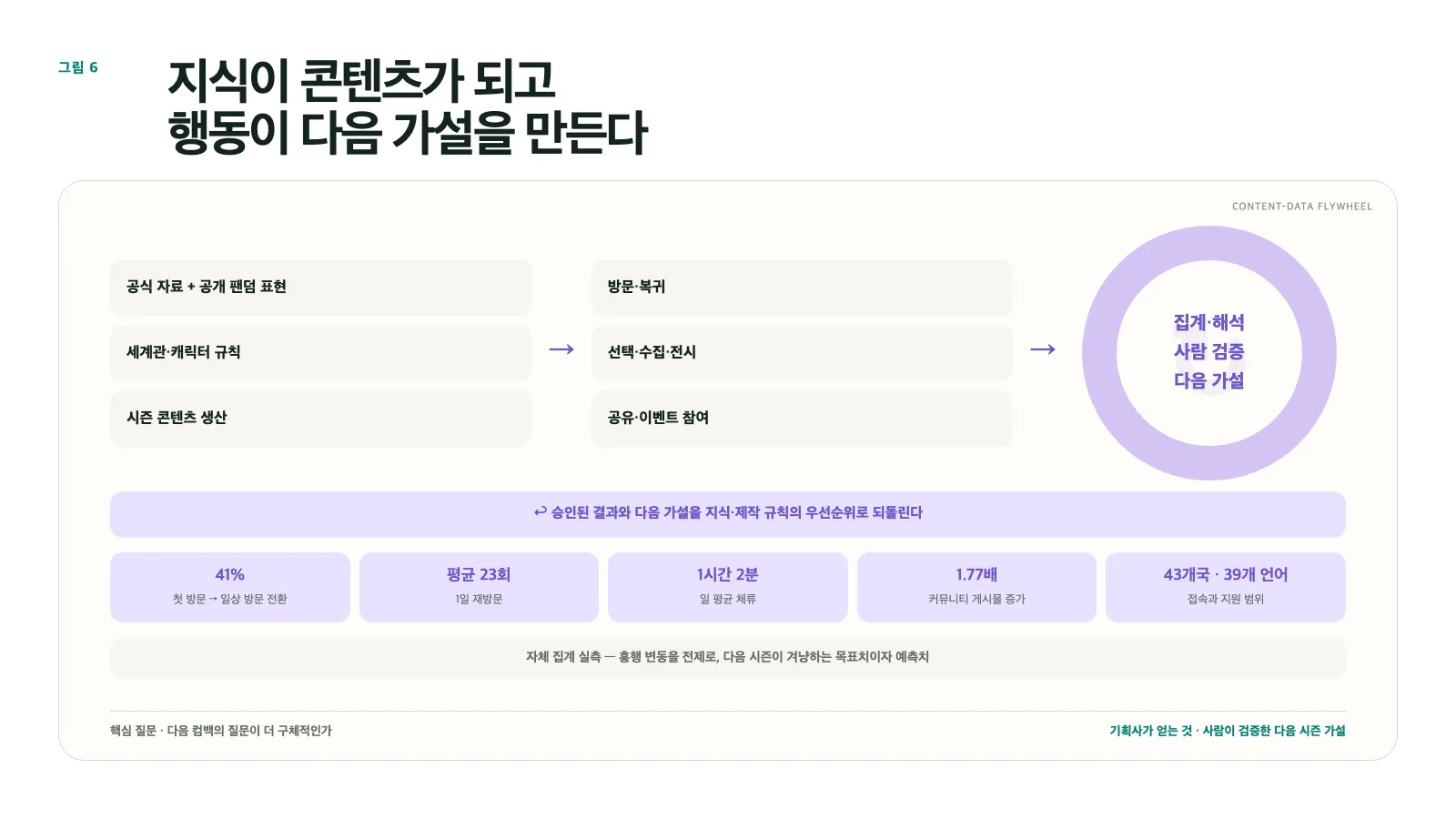
Figure 6. The data flywheel: knowledge → content → behavior → aggregation and interpretation → human verification → next hypothesis
7. The Three Final Deliverables the Agency Comes to Hold
If Fandom Activity is viewed as simple outsourced production, the quote becomes the sum of screen counts and feature counts. But idols and games are both, at their core, hit-driven businesses, and Fandom Activity is a content project where those two hit-driven logics overlap — one with considerable hit leverage. Approaching it as a single-content business that bets everything on whether one piece takes off is dangerous. So this project is designed in reverse. Inverting the familiar OSMU (one source multi-use), it is closer to a multi-purpose project of MUOS (multi-use one source), in which the multi-use across media and activities feeds back to strengthen the source IP. That is why the first question to ask is not the price, but what remains with the agency after the project ends. The scope of deliverables divides broadly into three.
First, one-off content deliverables. Images, videos, and campaign productions whose role ends at the moment of use. They fill the needed moment, but when the campaign ends, no repeatable capability remains in the organization.
Second, reusable IP assets. Fandom culture research, the worldview library, the two-layer worldview linking the real and the fictional, the character design guide, and the IP concepts, physical goods, data, and content resources created during operations — all of it remains for the next production. It becomes the source from which the same world can be continued even when staff and production partners change.
Third, the complete independently operated technology product. On top of the preceding IP assets, this scope adds UX and code, admin tools, the data system, operations documentation, and technical handover, so that the agency independently owns and operates the service.
The three scopes are not high, middle, and low pricing tiers but options with different purposes. To serve them, MEJE WORKS offers two collaboration plans. One is the free development plan. MEJE WORKS invests the development cost up front and shares the revenue in a mutual-growth model, letting the agency test the viability of Fandom Activity without an initial cash burden. The other is the paid development plan. The agency commissions the development, secures the B2B service and IP ownership, and builds the worldview, characters, and content resources directly as core company assets. Whichever plan is chosen, the baseline development process is the same, about 13 weeks. The detailed terms and scale of the two plans, and the rights and approval structure, are covered separately in the later installment, "What Does the Agency Come to Own?"
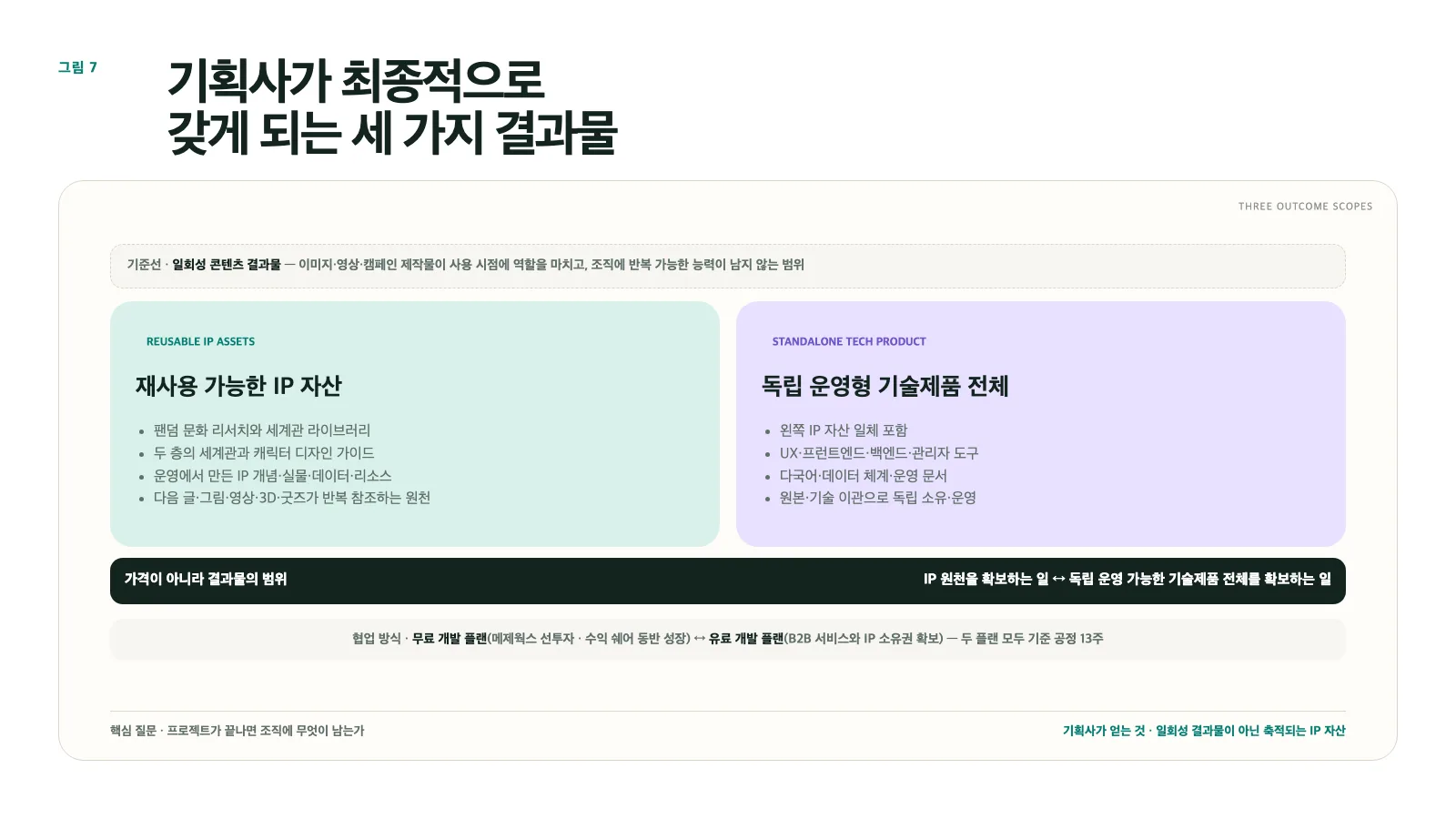
Figure 7. The difference in scope among the three final deliverables the agency comes to hold
8. While Preparing One Comeback, Prepare the World Fans Will Live In
The baseline process can be designed at about 13 weeks. In the first 4 weeks, the IP and the fandom are analyzed and the worldview's core questions are set. In the next 3 weeks, the worldview, character direction, and design rules are finalized. In the following 3 weeks, the fans' core actions, the season content, and the prototype are built. In the final 3 weeks, multilingual support, rights, alpha and beta testing, and the server and operations systems are checked. The timeline shifts with the state of materials and the scope of approvals, but it has the advantage of running in parallel with comeback preparation.
Starting small is the better path. Rather than building every medium at once, open a pilot with one season, one central action, one character group, and one communal outcome. After launch, organize the concepts, physical goods, data, and resources generated in live operations into an asset package, approve the next hypotheses in the season review, and send them back into the next season. Success is not measured by revenue alone. Look together at whether fans returned without burden, whether the community gained material for expression, whether reusable knowledge and guides remained with the company, whether the next season's production got faster, and whether evidence emerged for which IP elements to grow.
The idol industry has long excelled at creating intense moments. What it needs now is the ability to connect moment to moment with relationships, data, and a world. Fandom Activity is not a project that gives fans more to do. It is a project that gives official meaning and means of expression to the time fans are already spending. For the agency, it is a way to keep the IP alive without continually consuming likeness and schedules, while accumulating organizational knowledge, independent characters, and first-party data along the way.
In an era when AI drives text, image, video, and modeling, the stronger company will not be the one that makes the most content but the one that renews the same world for the longest, most consistently, together with its fans. If the album opens the door to a world, Fandom Activity builds the time fans live inside that door every day. Instead of waiting for the next comeback, building together the world where the next comeback will arrive — that is the new fandom industry we propose.
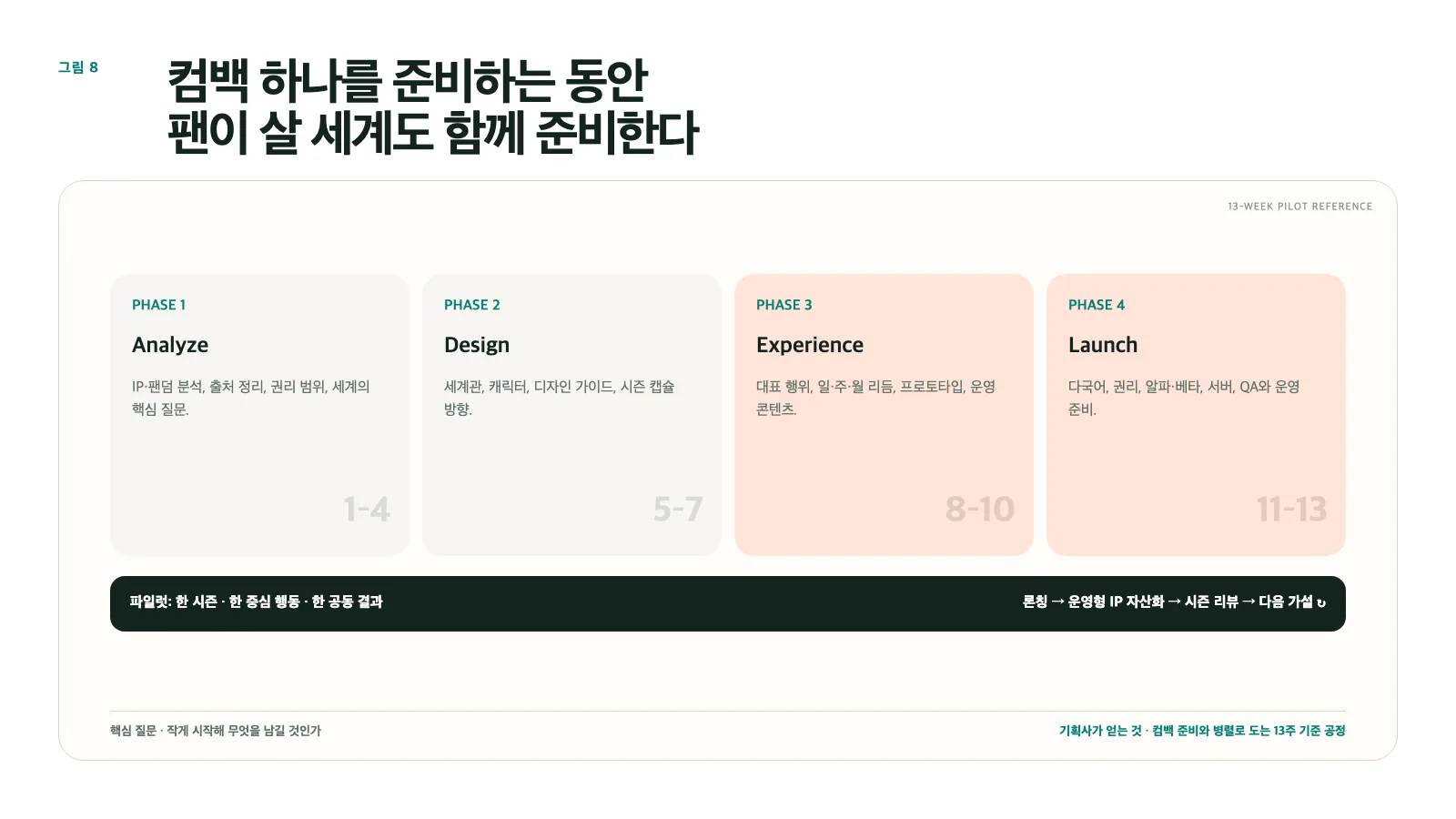
Figure 8. The 13-week pilot: analysis → design → experience → launch, and the next season
MEJE WORKS, the team writing this series, is a content team that designs and operates worldviews, characters, and Fandom Activity for idol IP. It brings together people with long careers in games, content, and technology, including the planner who led HYBE's worldview library and BTS World. What those years taught is one thing: the most important element in idol content is respect for the IP, and respect comes not from large-scale, high-spec technology but from handling the fandom's language and memory with precision. So instead of creation that leans on individual intuition, we chose to build worlds on data and renew them together with fans. We believe Fandom Activity is an operating system that turns idol IP into "a world fans live in every day," and this series will lay out the method piece by piece. The next installment, "How Fandom's Tacit Knowledge Becomes a Company Asset," covers the process by which knowledge only fans possessed becomes company IP assets with sources and grades. Additional materials for collaboration review and on-site briefings are available on request at any time.