MEJE PROCESS · Fandom Activity (7 chapters)
Data Can Be a Competitive Edge Without Surveilling Fans
Data Can Be a Competitive Edge Without Surveilling Fans
Collect the Minimum, Learn the Maximum
Two fears face each other across this subject. The company's fear is having no data. In the meeting that decides the comeback concept, the grounds are still instinct, memory, and the conviction of the loudest voice in the room. The fan's fear is becoming data. The anxiety that my affection will be converted into a number, my behavior tracked, and those numbers used to manipulate me. The data design of Fandom Activity must resolve both fears at once. It is possible — provided the order is right.
1. Outcome Metrics and Behavioral Data Are Different
Agencies already watch many numbers. Chart rankings, album sales, video views, social reactions. But these are mostly outcome metrics. They show the total after the movement, not what moved the fans. Why this album's merchandise sold well, and which symbol stayed in fans' hearts, cannot be worked backward from outcome metrics.
First-party behavioral data inside one's own world is different. Which expression of which character gets saved, which outfit's release week saw returns increase, which collectibles are displayed and shared more than acquired, which language region reads which story to the end. Because the choices and repetitions before the outcome become visible, it becomes material for forming the next planning hypothesis. It is knowledge obtainable only at one's own touchpoint, beyond the platform algorithms.
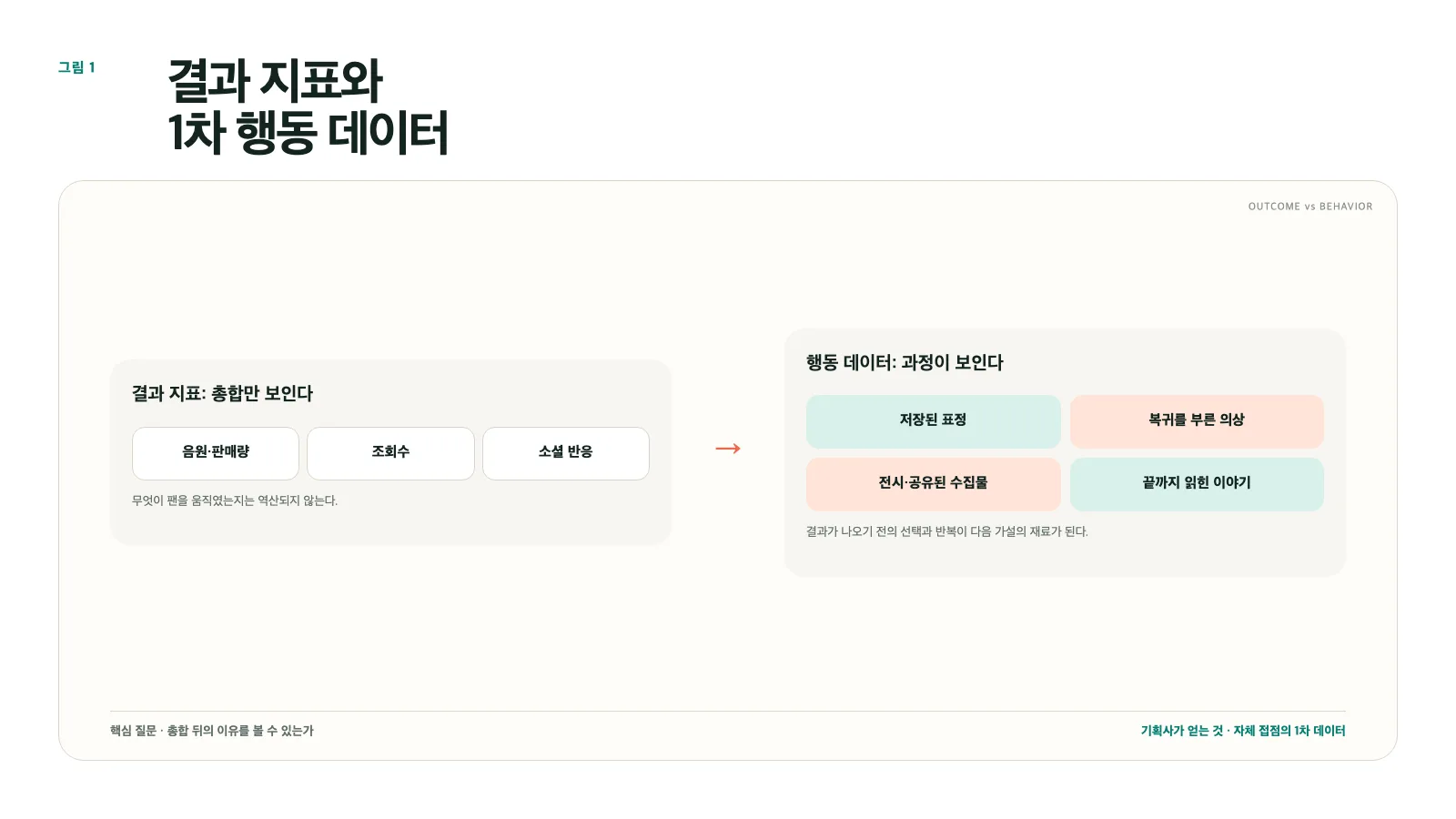
Figure 1. Outcome metrics and first-party behavioral data: the eye that sees totals and the eye that sees process
2. What Fans Say and What Fans Do
Surveys and interviews are useful, but their limits are stark. Fans answer as their ideal selves and act as their actual selves. A fan who answers "I wish the narrative went deeper" may in fact spend most of her time decorating, and may return every day to content she called mediocre. This is not lying; speech and behavior are truths of different layers.
So the principle is to observe repeatedly without concluding. Instead of ruling that a fan "likes X," watch across a season how fans actually responded to each proposal. A single spike may be noise, but a repeating pattern is signal. The role of data is not to read fans' minds but to make the next proposal a little better.
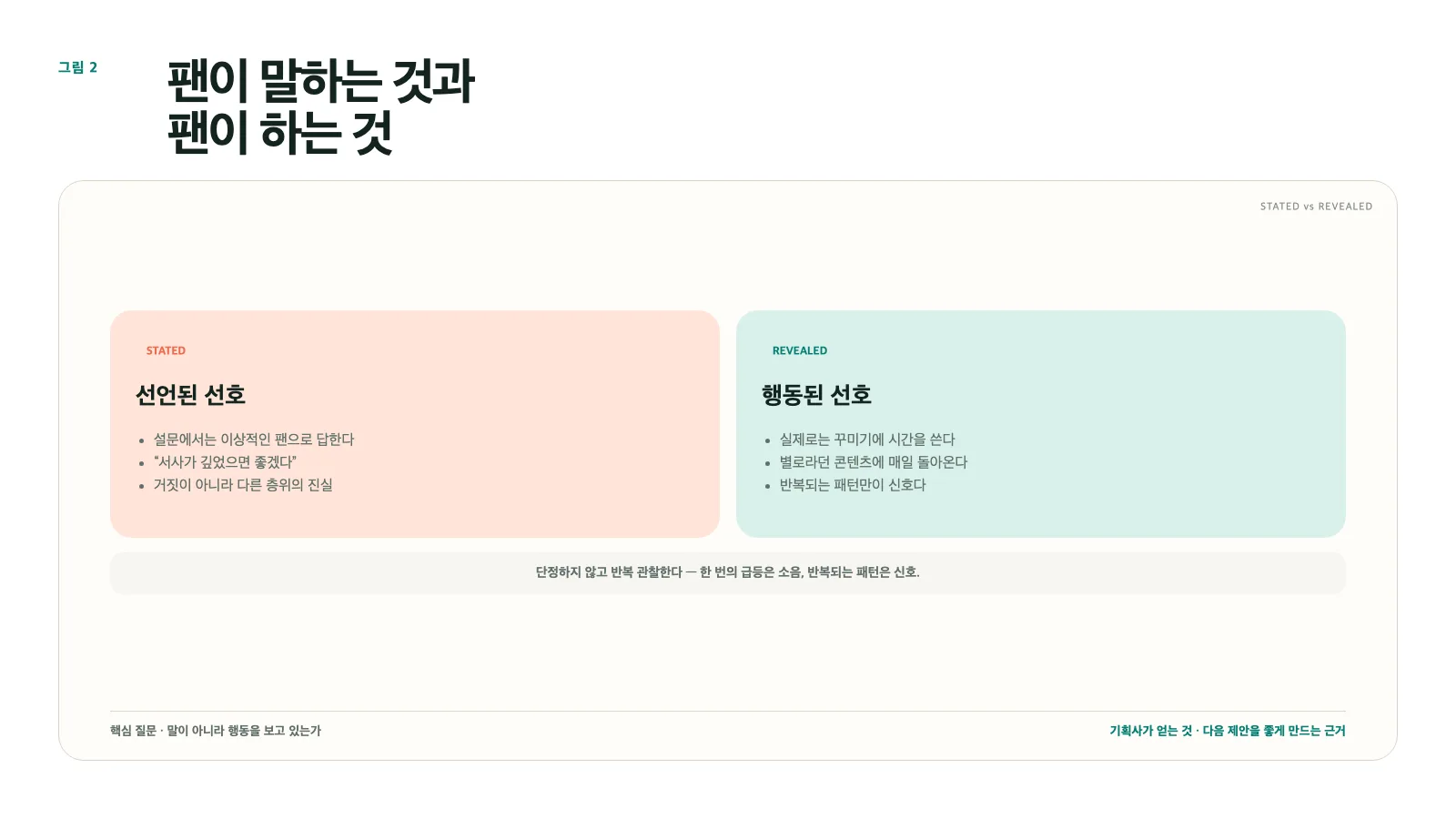
Figure 2. Declared preference and enacted preference: only repeated observation separates the signal
3. What to Watch: Eight Questions
A metrics system need not be complicated. It is enough that each metric answers a clear question. Acquisition asks which channels brought new fans and existing fans, and activation asks whether first-time fans understood the world's grammar. Retention looks at whether there was a reason to return without coercion, and engagement at which actions created attachment. Spread is the question of what became material for fans' self-expression, and conversion is the question of whether the experience flowed naturally into business value. IP assets watch which characters and props are growing into independent IP, and operations watches whether the next season can be made faster and more stable.
The eight questions point in one direction. They evaluate our proposals, not the fans. If retention is low, fans are not lazy — the reason to return was weak. If engagement is low, fans are not indifferent — the actions failed to create meaning. Data must always be aimed at the service.
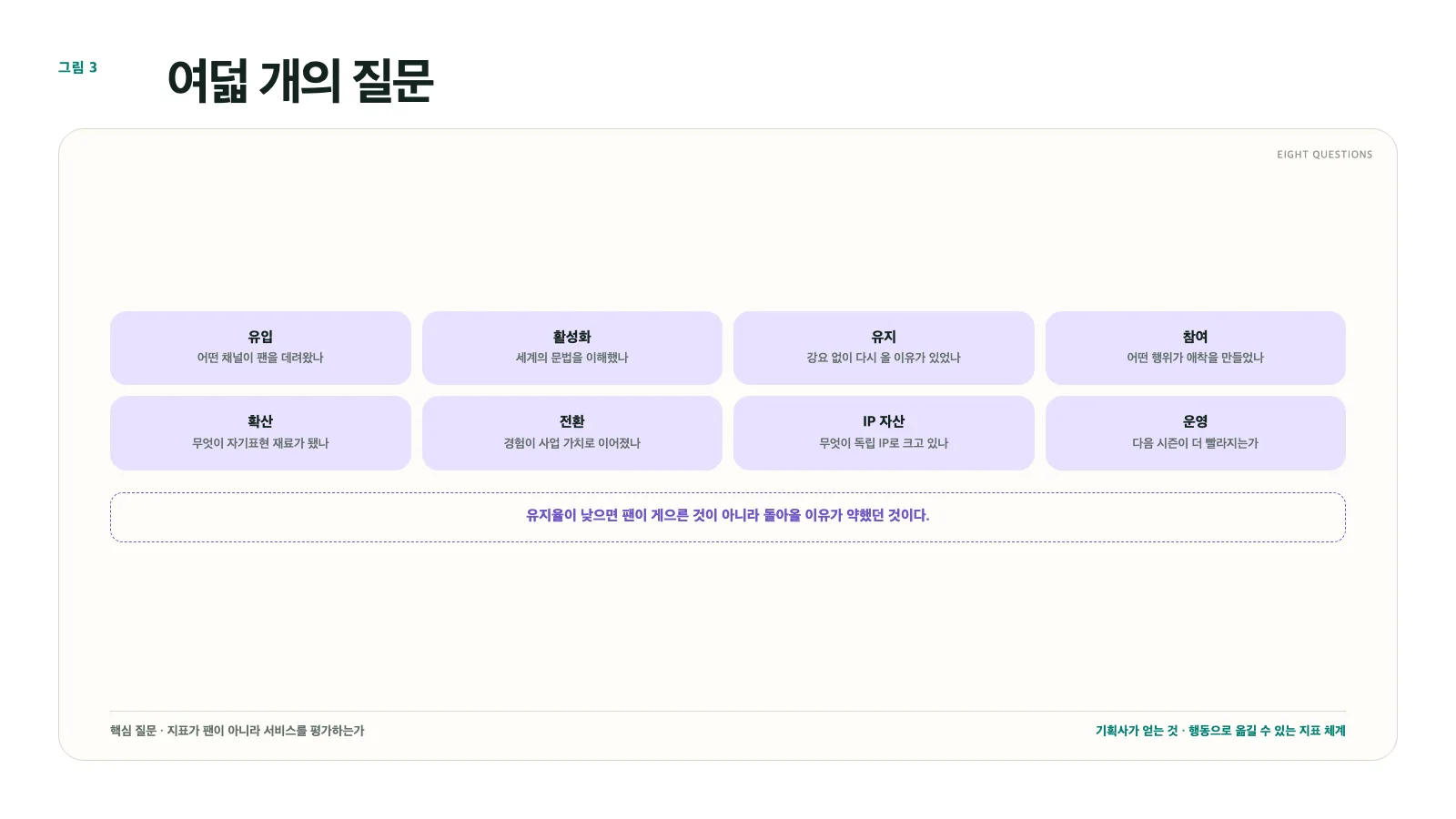
Figure 3. The eight questions: acquisition, activation, retention, engagement, spread, conversion, IP assets, operations
4. The Principle of Minimal Collection and the Separation of Two Data Types
The collection principle is simple. Only the necessary behaviors, minimally, aggregation first. Aggregating patterns takes priority over identifying individuals; underage fans and sensitive information are protected; inference about private life, rumors, health, romance, and political leanings is excluded from the start. Retention periods are set, and old individual-level data is deleted.
And the separation of the two data types described in part 1 is upheld. Research data, which handles public materials and the fandom's public expression, is governed by platform policies, sourcing, and quotation limits; visits, choices, collections, and shares inside the service are governed by notice, consent, and minimal collection. Keeping these two data types — different in purpose and principle — unmixed is the basic architecture of trust. MEJE WORKS holds this observation and analysis system as a registered patent, "AI-based real-time user activity analysis system" (Registered Patent No. 10-2848232). A patent, of course, is a registration of method, not a guarantee of results — what matters is that the method is designed to operate within boundaries that respect fans.
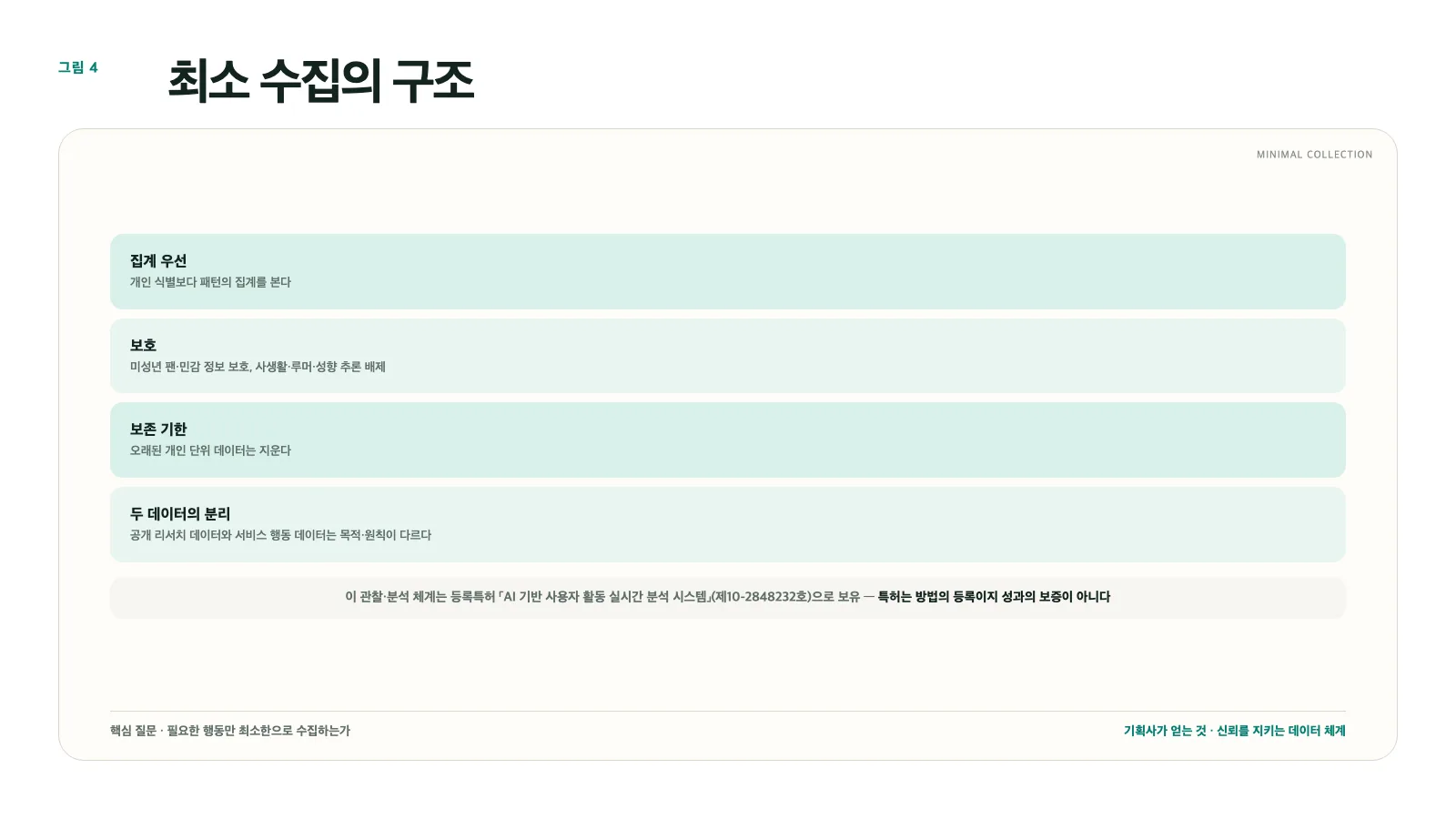
Figure 4. The minimal collection structure: aggregation first, sensitive information excluded, research and behavioral data separated
5. What We Do Not Do with Data
Competitiveness also comes from what you refuse to do. Behavioral data is never used for penalties or rankings. Fans on the verge of leaving are never sent anxiety-baiting notifications. High-spending fans are never singled out for targeted payment pressure. Dark patterns that stampede decisions with deadline panic and limited-quantity fear are never used. Just as part 4 described no-punishment and non-competition, at the data layer too, the devices of manipulation are deliberately excluded.
This is not a loss. Fandom is the community quickest to detect surveillance and manipulation, and trust once broken is not recovered in a single season. Restricting data's use to experience improvement and hypothesis validation is an ethical declaration and, at the same time, the most practical strategy for operating a world over the long term.
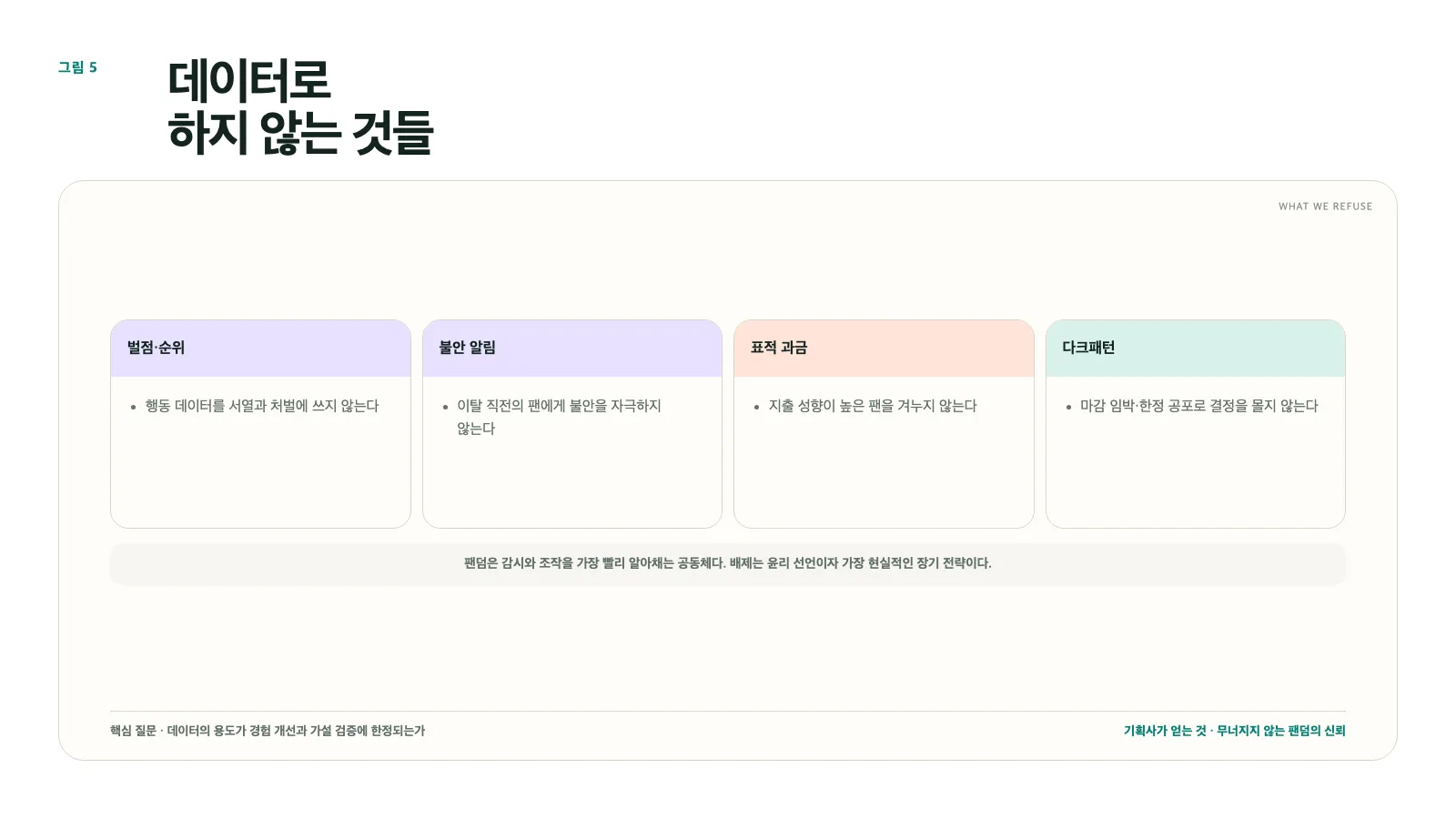
Figure 5. The list of what we do not do: no penalties, no manipulative notifications, no targeted payment pressure, no dark patterns
6. The Road Back to the Next Comeback
How is the data gathered this way used? Not for automatic decisions but for better questions. Which symbol should be grown? Which character should be tested as merchandise? Which region should receive which format of content first? From aggregated and interpreted data, people review context and bias to select hypotheses, and only what is validated is reflected in the next season and the library.
Numbers like our self-measured internal figures — 41% of first-time visitors converting to everyday visits, community posts up 1.77x — hold meaning only inside this circuit. The numbers are not a boast but the targets and forecasts the next season takes aim at, and achieving that forecast in a way that respects fans is what operational skill means. Knowledge becomes content, content becomes behavior, and behavior — passed through human verification — becomes the next question: data ethics is the final piece of the flywheel this series has been drawing all along.
One question remains. What does all of this look like translated into the language of business? The final installment, "What Does the Agency Come to Own?", covers the two collaboration plans, the scope of deliverables, and the pilot's success and stop criteria.
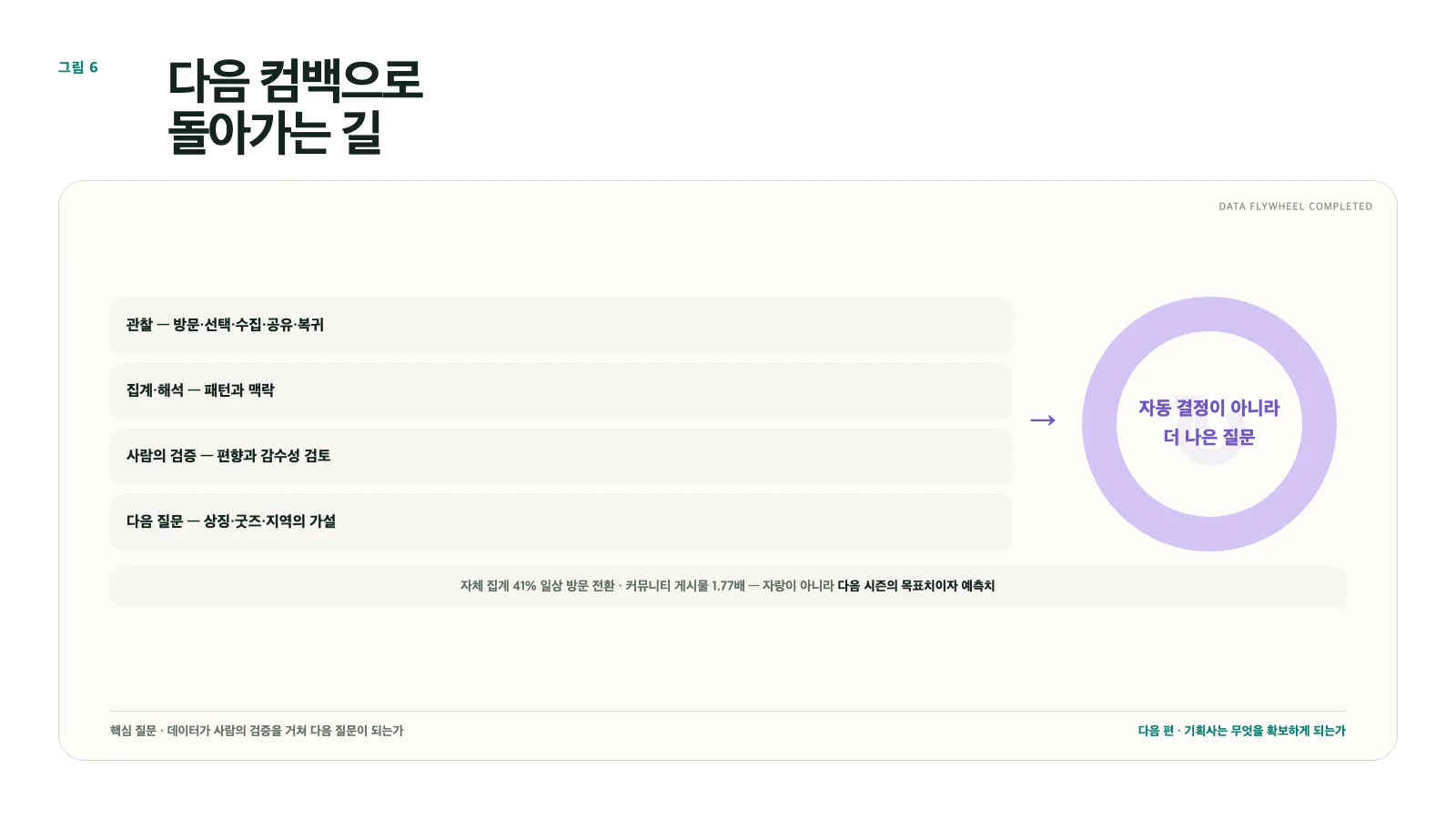
Figure 6. Completing the data flywheel: observation → aggregation and interpretation → human verification → next question
MEJE WORKS, the team writing this series, is a content team that designs and operates worldviews, characters, and Fandom Activity for idol IP. Fandom Activity is an operating system that turns idol IP into "a world fans live in every day," and this series is laying out the method piece by piece. Additional materials for collaboration review and on-site briefings are available on request at any time.