MEJE PROCESS · Fandom Activity (7 chapters)
What Does the Agency Come to Own?
What Does the Agency Come to Own?
Free Development and Paid Development: The Difference in What Each Plan Leaves Behind
There is a question this series has deferred throughout. So how much does this project cost, and what exactly does the agency receive? As stated in part 1, if Fandom Activity is viewed as simple outsourced production, the quote becomes the sum of screen counts and feature counts. That arithmetic fails because what is being priced in this project is not screens but the assets that remain with the company and keep being used after the project ends. This installment covers the scope of those assets and the collaboration models in concrete terms.
To say it up front: this piece deals with structure. Specific scale and terms are settled by negotiation per project, depending on the state and scope of materials, and are presented in a separate briefing.
1. The Three Deliverables, Revisited
Let us bring back the three deliverable scopes distinguished in part 1. First, one-off content deliverables — images, videos, and campaign productions whose role ends at the moment of use. Second, reusable IP assets — the worldview library and character guide, plus the concepts, physical goods, data, and resources created during operations, all remaining for the next production. Third, the complete independently operated technology product — adding UX and code, admin tools, the data system, operations documentation, and technical handover, so the agency independently owns and operates the service.
The three scopes are not high, middle, and low pricing tiers but options with different purposes. There are moments when a one-off deliverable is what is needed. But idols and games are both hit-driven businesses, and in a business of large swings, what protects the organization is not the fate of a single release but an accumulating source. That is why the central product of Fandom Activity is the second: reusable IP assets.
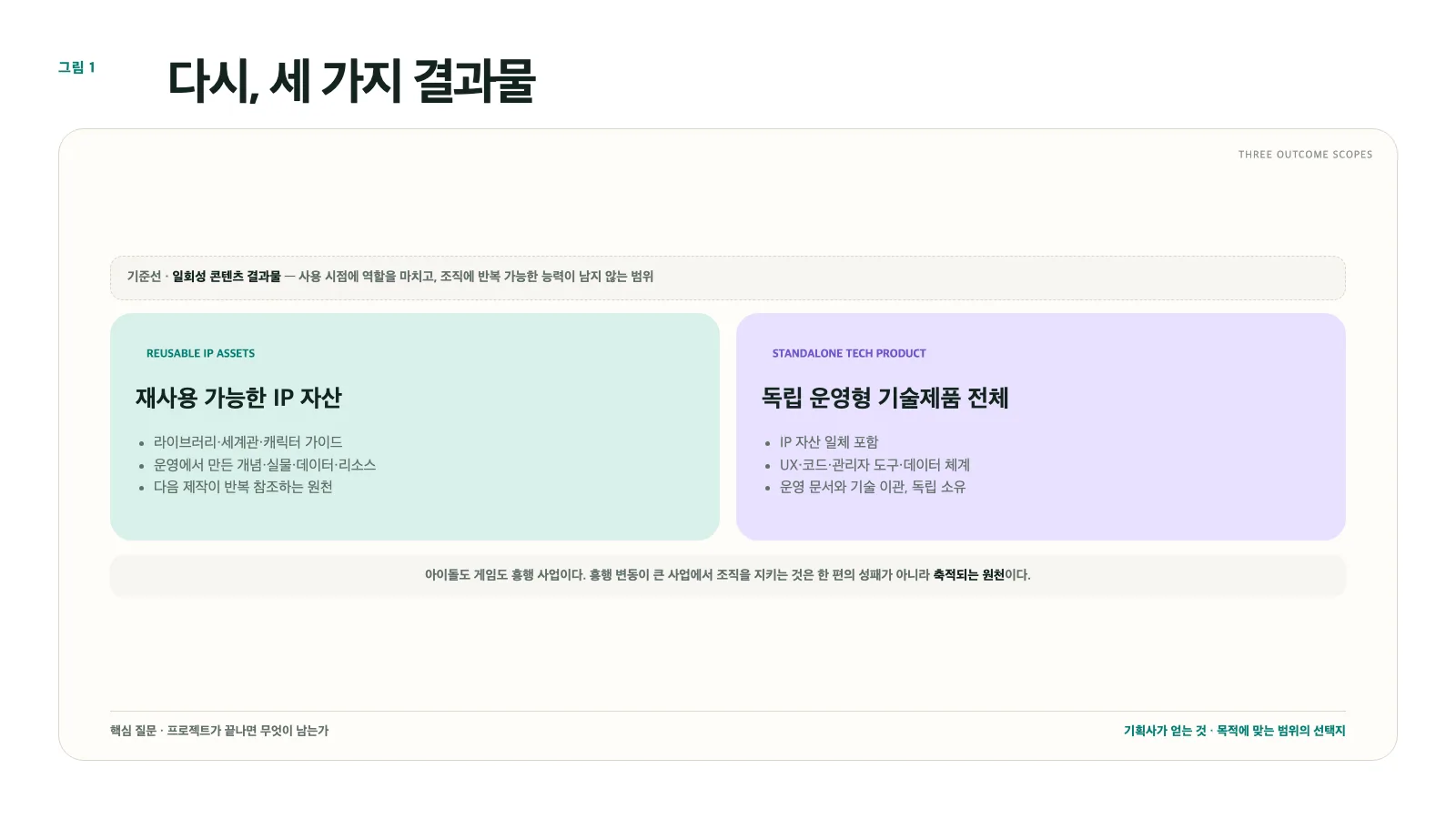
Figure 1. The three deliverable scopes and the situations each fits
2. What Goes into B2B IP Asset Development
A full set of IP assets comprises five areas. First, research and analysis of the fandom's public materials. Official materials and public fandom responses, keywords, symbols, and the fandom's language and sensibilities, organized with sources. Second, the worldview library. People, places, events, symbols, albums, and stages connected through a wiki, timelines, relationship maps, and briefs for creators. Third, the two-layer worldview. The worldview the real idol's activities will reference and the fictional worldview where independent characters operate, designed under the same philosophy. Fourth, character design IP. Planning and design for a baseline of around five characters, with personality, behavior, parts, prohibition rules, and a transmedia guide. Fifth, the operational fandom IP asset. The activity concepts and event formats, physical production plans, aggregated data, and resources for stories, illustration, UI, and 3D created while operating seasons, organized into an asset bundle.
Paid development that builds this full set is a B2B professional development domain whose scale is determined by the depth of materials, the number of characters, and the finish level of guides and outputs. It is not the cost of drawing a few screens; it is the cost of creating the source that subsequent text, illustration, video, 3D, and merchandise production will reference again and again. Direct costs such as the actual live operations period, physical production quantities, servers, and external licenses are scoped separately according to the combined scope.
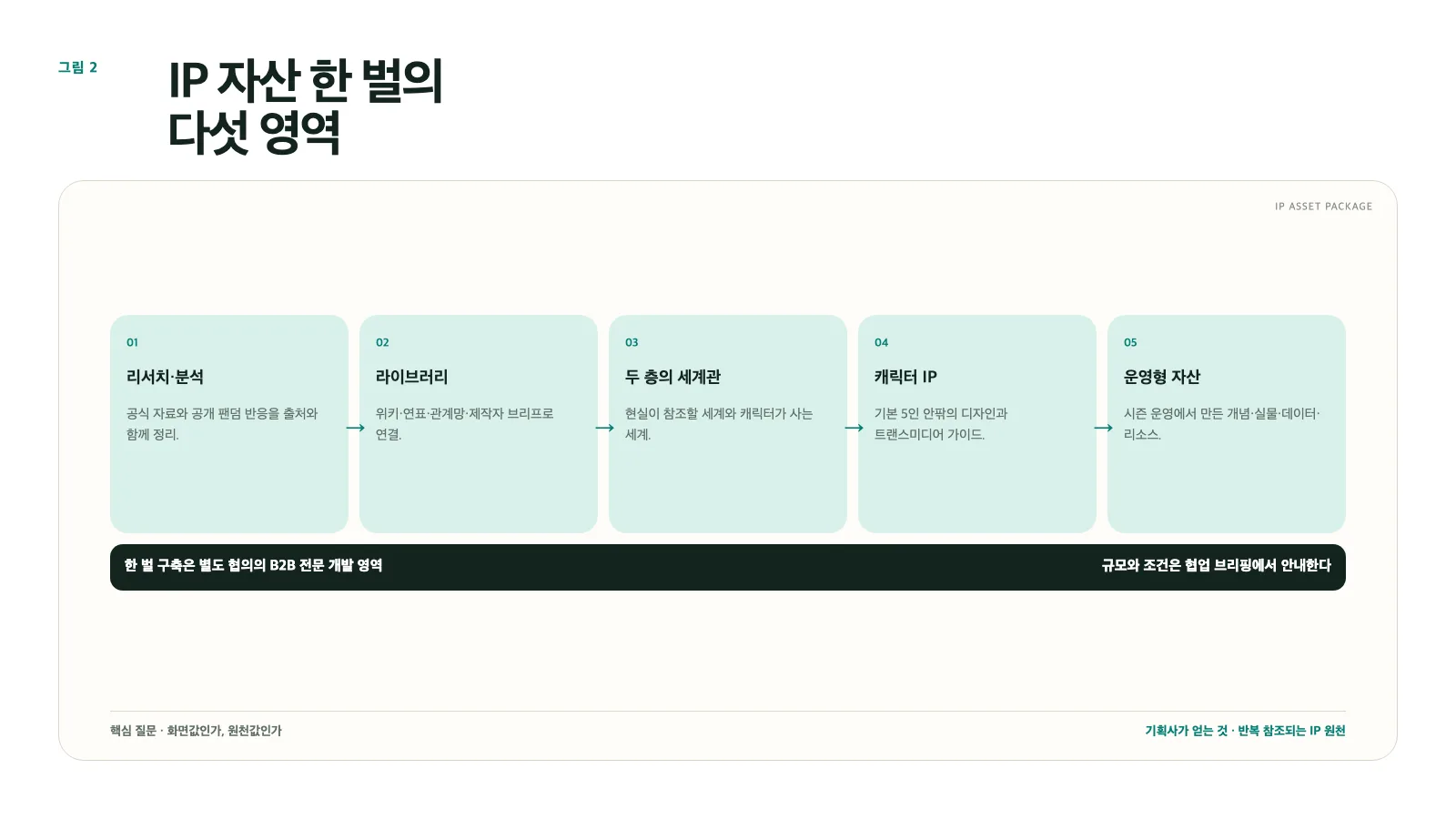
Figure 2. The five areas of a full IP asset set
3. The Scope of the Complete Independently Operated Technology Product
When, on top of the IP assets, the agency commissions the complete technology product for independently owning and operating Fandom Activity, the scope changes. Product design for the fan experience, game loop, and season structure. Mobile web UX/UI and front end. Back end and accounts, database, content management tools. Behavioral data collection and analysis with an operations dashboard. Multilingual architecture. Server, cloud, security, and privacy scope. Alpha and beta testing with per-device QA. The live operations system. And the handover of source files, code, technical documentation, and operations manuals, with comprehensive rights within the contract's scope.
This whole is a project priced separately from IP asset development. What deserves emphasis is the relationship between the two. Building the complete technology product is not the premium tier above IP asset development. The former is a project that creates "an IP source that keeps multiplying"; the latter is a project that builds and hands over "a complete, independently operable technology product" including that source. They are separate coordinates with different deliverables and different scopes of responsibility.
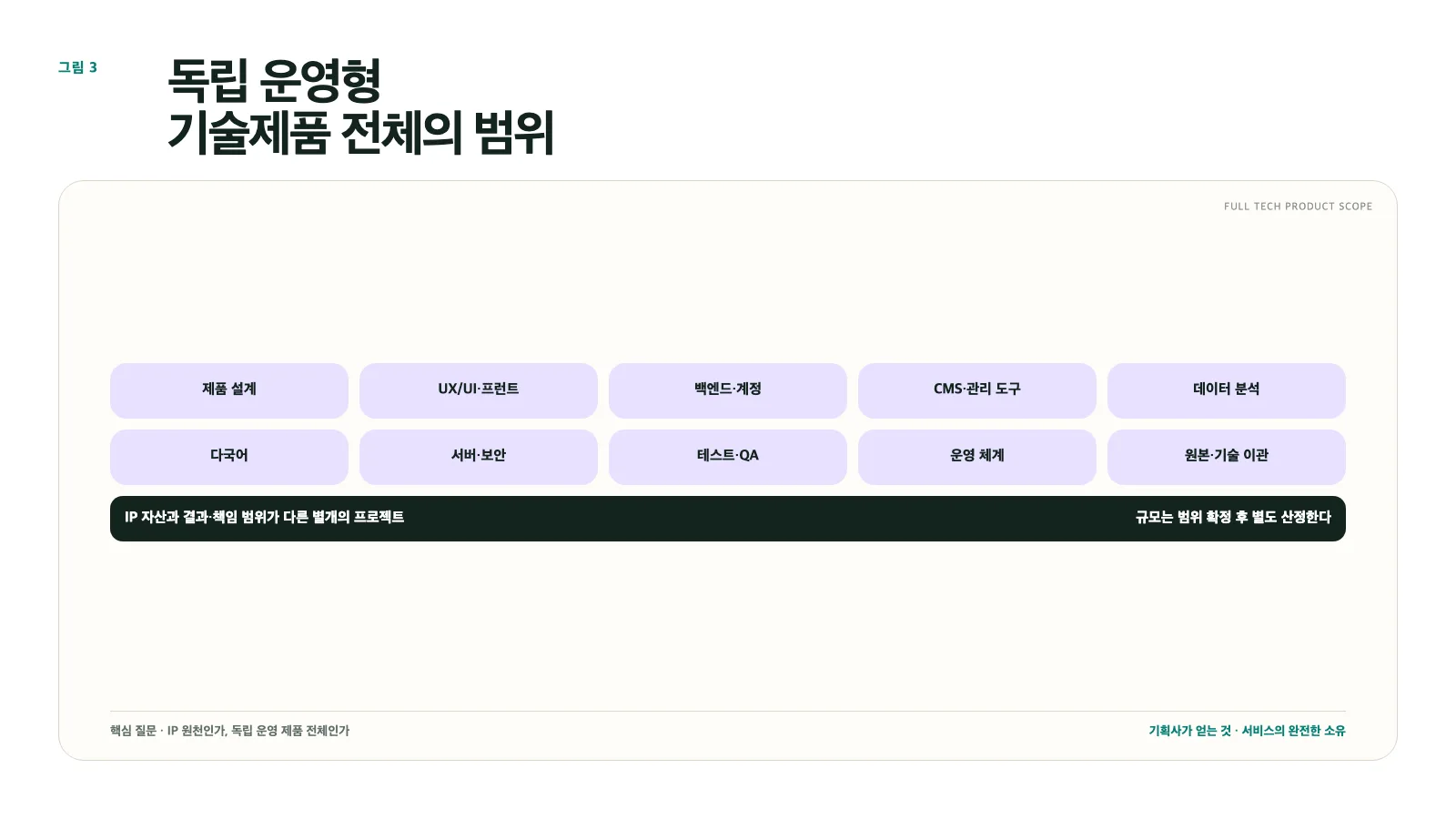
Figure 3. IP asset development and complete technology product construction: not before-and-after discounts but different projects
4. The Free Development Plan: Sharing Risk, Sharing Revenue
The first mode of collaboration is the free development plan. MEJE WORKS invests the development cost up front and shares the revenue the service generates — a mutual-growth model. The agency bears no initial cash burden. After the baseline 13-week process, a season opens, and thereafter the seasons are operated together, growing a long-term IP business jointly.
This plan fits agencies that want to test the viability of Fandom Activity without risk. The artists focus on their core work, the studio carries the worldview, the characters, and the operations, and when results come, they are shared. The specifics of revenue split and rights structure are contract matters settled by negotiation per project, so no numbers are given here. The important principle is one: "free" is the name of a collaboration model, not a price, and even during the joint operations period, the worldview, characters, and data accumulate toward the agency's next business within the scope the contract defines.
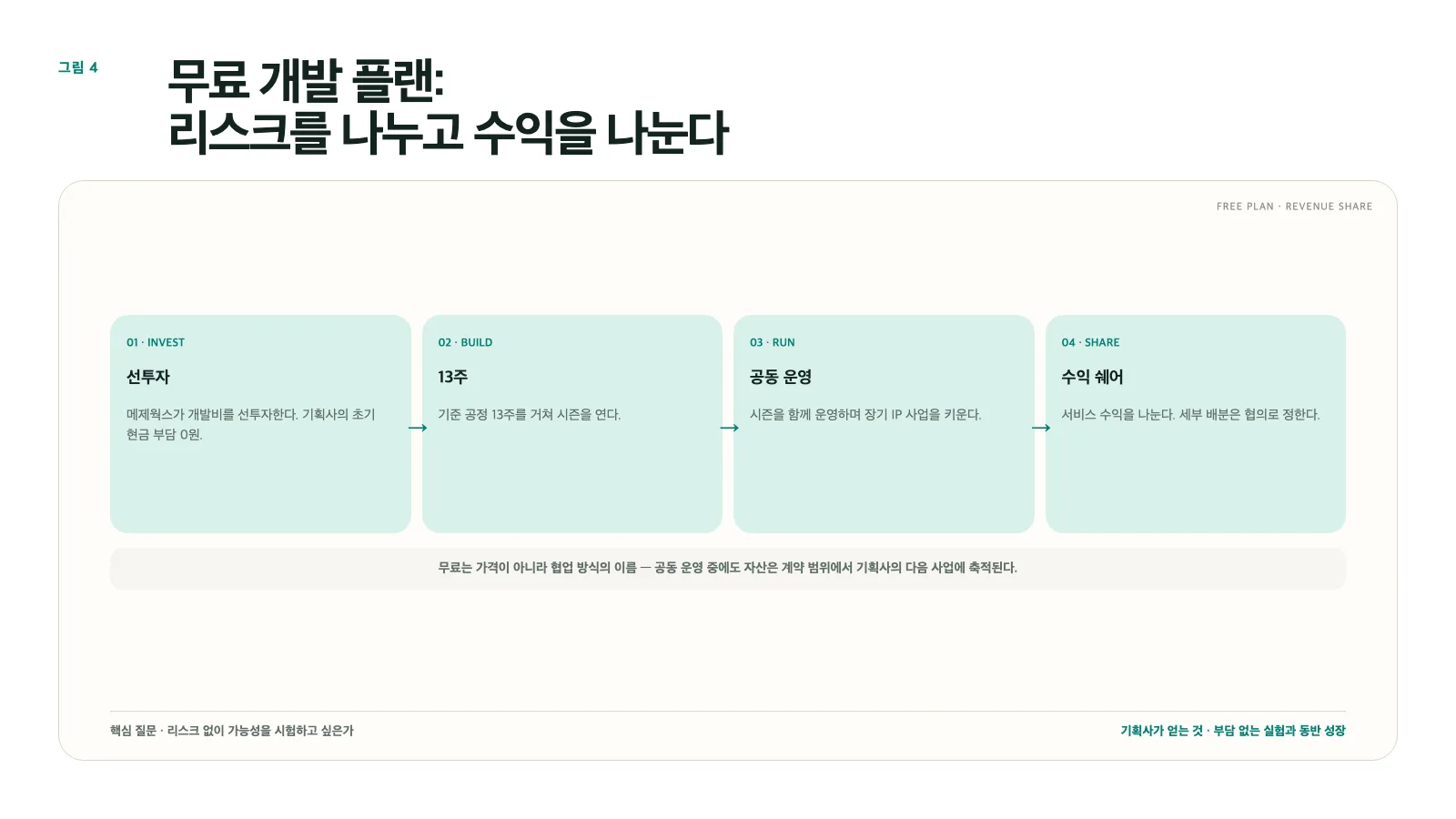
Figure 4. The structure of the free development plan: up-front investment → 13 weeks → joint operations → revenue share
5. The Paid Development Plan: Securing IP Ownership
The second mode is the paid development plan. The agency commissions the development and secures the B2B service and IP ownership — a development services model that builds the worldview, characters, and content resources directly as core company assets. The scope can be chosen at two levels: building up to the full IP asset set of section 2, or owning and receiving handover of the complete independently operated technology product of section 3.
This plan fits agencies that make IP expansion a long-term corporate strategy. The library and character guide they secure become the source referenced repeatedly in subsequent merchandise, webtoons, video, games, and licensing, and with each comeback, only the season capsule needs swapping to reuse the same engine. Whichever plan is chosen, the baseline development process is the same, about 13 weeks, and it can run in parallel with comeback preparation.
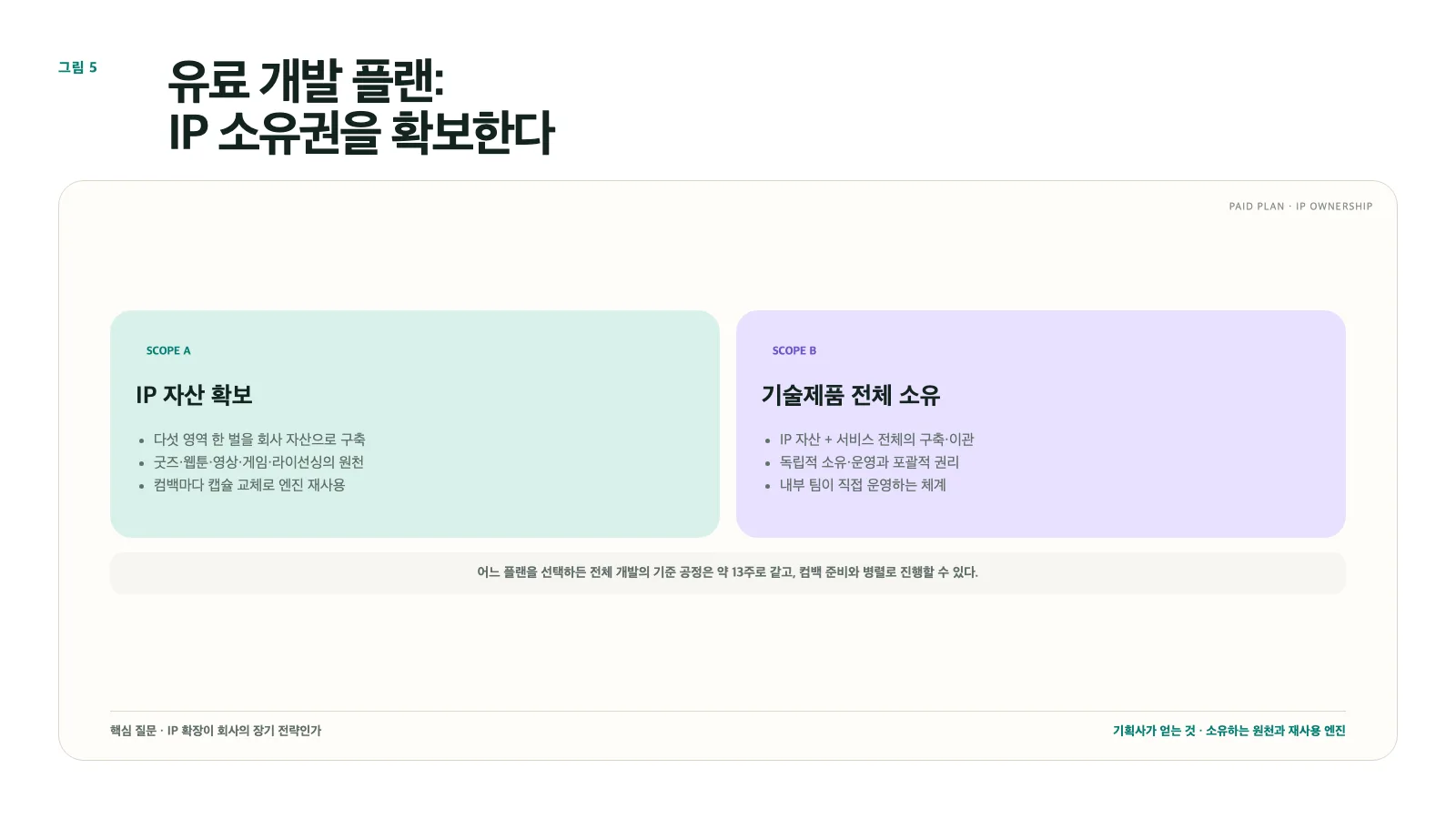
Figure 5. The two scopes of the paid development plan: securing IP assets ↔ owning the complete technology product
6. From Source Lock to Review: The Approval Structure
Whichever plan is chosen, collaboration needs a clear approval structure. First comes the source lock, which locks in usable and prohibited materials. Which album assets and fandom expressions may be used, and what must not be touched, is finalized at the start of the contract. Next, how those materials convert into character elements and service features is approved through the content map. After that, the full season content, key visuals, and the actual mobile build with its rights notices are reviewed in turn.
The boundary of roles is equally clear. The agency is responsible for the boundaries of the brand and the members' image; the studio is responsible for expert judgment on product, content, and operations. When each side's expertise is translated into scope and schedule, a future content experiment with large hit leverage becomes a controllable business experiment.
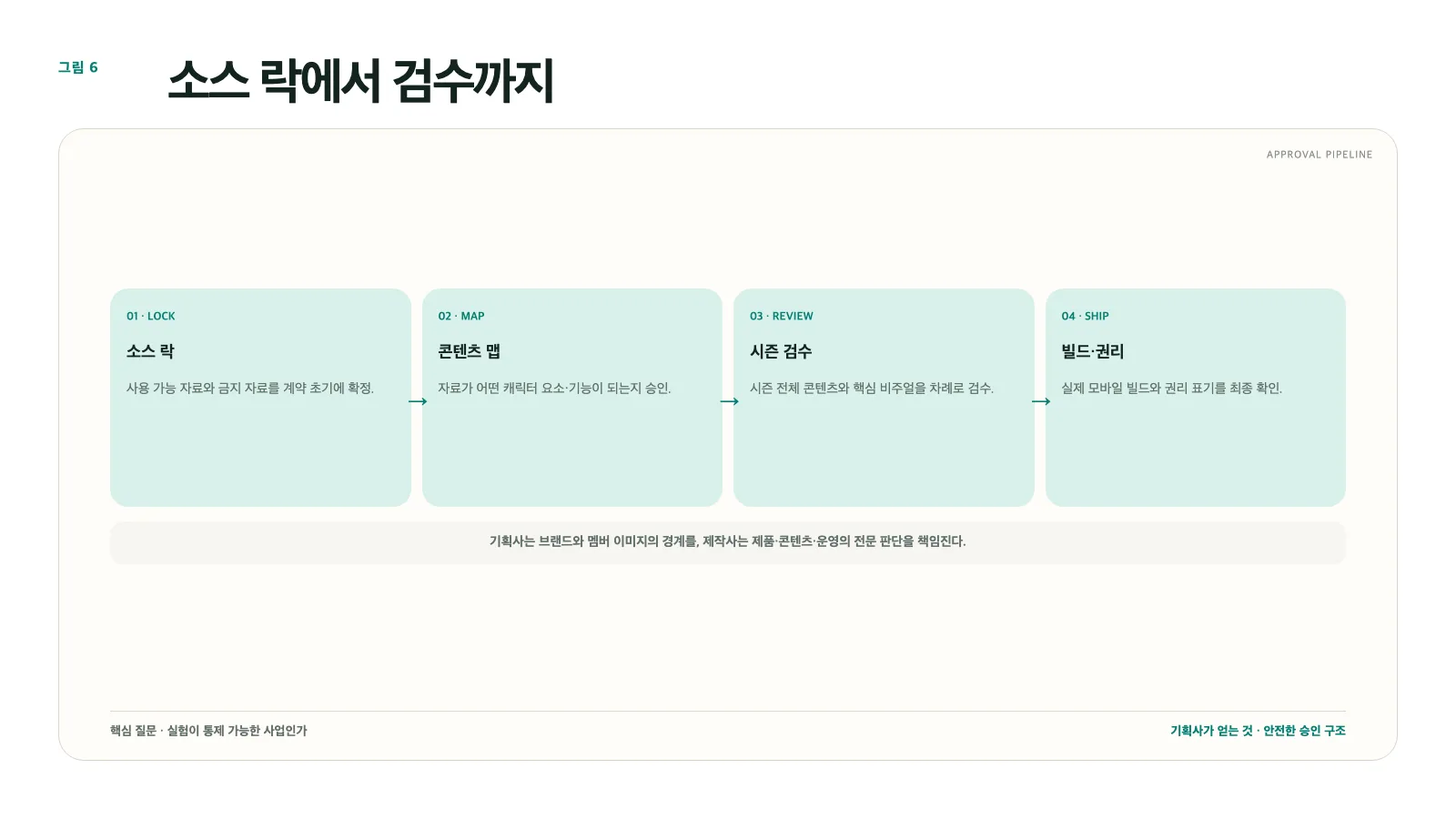
Figure 6. The approval pipeline: source lock → content map → season content → build and rights review
7. The Pilot's Success Criteria and Stop Criteria
A pilot's success is not judged by revenue alone. Did fans return without burden? Did the community gain material for expression? Did reusable knowledge and guides remain with the company? Did the next season's production speed increase? Did evidence emerge for which IP elements to grow? The self-measured actuals serve as the targets and forecasts for this validation.
Stop criteria are agreed in advance as well. When participation in the core action falls short of target by mid-season and the improvement hypotheses are exhausted. When the rights review surfaces a risk that cannot be resolved. When the organization cannot sustain the weekly approval rhythm. What matters here is that even upon stopping, the research, the library, the character guide, and the operations data remain with the company. In the MUOS structure, where multi-use strengthens the one source, even a failed season becomes an asset that lowers the cost of the next attempt.
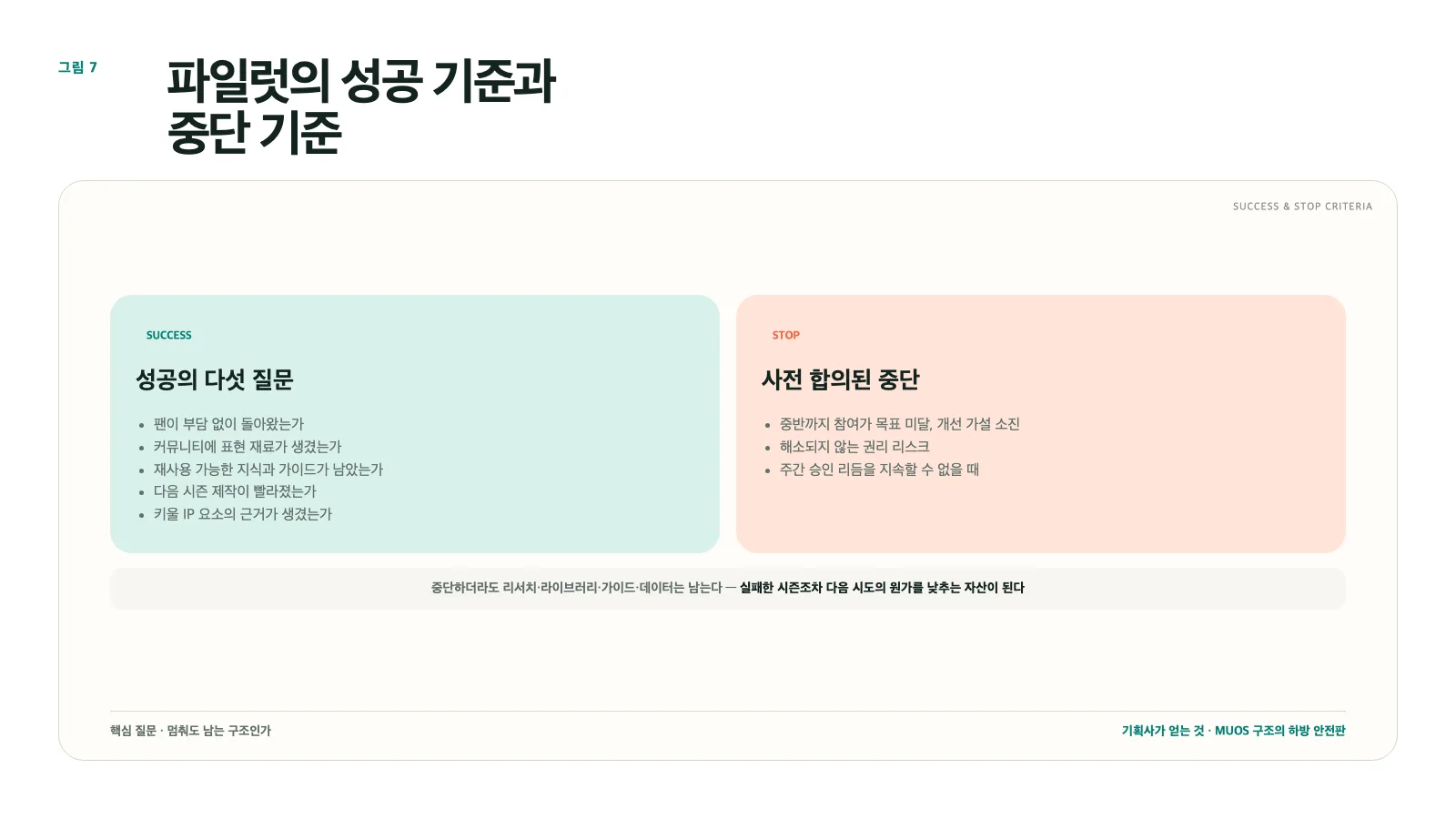
Figure 7. The five success criteria and the pre-agreed stop criteria
8. Closing the Series: What the Agency Finally Comes to Hold
Across seven installments, one structure has been drawn. The fandom's tacit knowledge becomes sourced knowledge, knowledge becomes worldview and characters, the world becomes the fans' daily rhythm, and fans' responses — passed through human verification — become the next comeback's questions. And with every turn of that cycle, concepts, physical goods, data, and resources accumulate in the company.
What the agency finally secures is this cycle itself. Not a one-off deliverable, but organizational memory that continues even as staff and production partners change. An IP source that accumulates through the swings of a hit-driven business. And a world fans will live in every day. Fandom Activity is an operating system that turns idol IP into "a world fans live in every day." Instead of waiting for the next comeback, it is the work of building together the world where the next comeback will arrive. That collaboration can begin with either of two plans: free development or paid development.
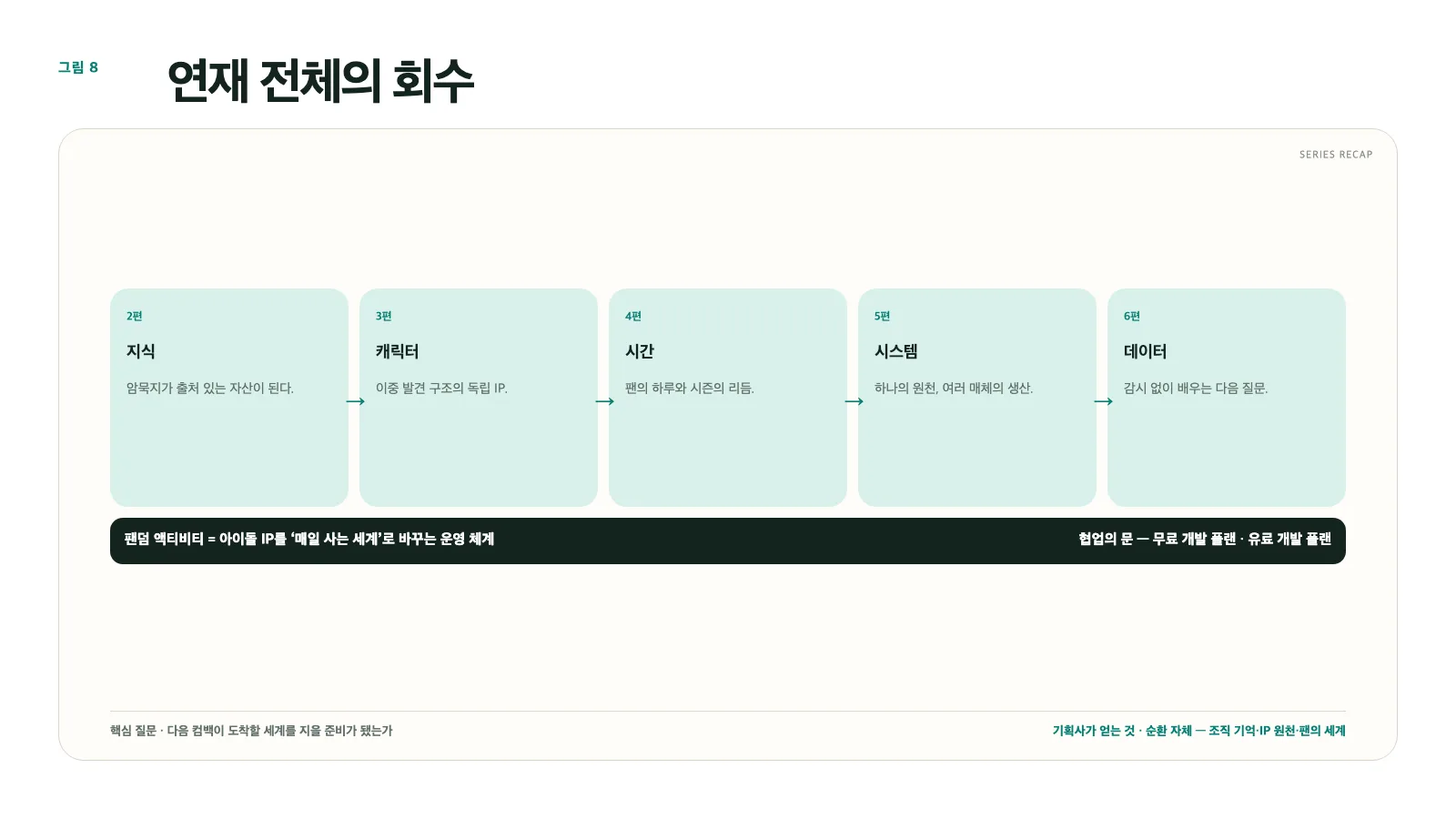
Figure 8. The series brought home: the cycle of knowledge → world → time → data → assets, and the two plans
MEJE WORKS, the team that wrote this series, is a content team that designs and operates worldviews, characters, and Fandom Activity for idol IP. It brings together people with long careers in games, content, and technology, including the planner who led HYBE's worldview library and BTS World. Additional materials for collaboration review, detailed per-component criteria, and on-site briefings are available on request at any time.