MEJE PROCESS · Fandom Activity (7 chapters)
Designing a Fan's Day
Designing a Fan's Day
From a 30-Second Ritual to a 100-Day Relationship
There is a scene part 1 showed only in passing. A fan on her commute spends three minutes greeting the character, choosing a walking course, and placing today's piece in the space. This installment unfolds the blueprint of those three minutes. The B2C side of Fandom Activity is not a list of content but a structure of time, and a good time structure never emerges by accident.
The premise is sober. Fans are busy. They have school, work, and life, and rarely only one thing they love. Fans who can consume long content every day are a minority, and a service built on that assumption will inevitably exhaust them. So the starting point of the design is not "what more can we give fans" but "how many minutes of a fan's day can we respectfully occupy."
1. The Door to the Day Opens in 30 Seconds to 3 Minutes
The daily experience of Fandom Activity is completed in one core action. Greet, take a walk, place one piece, listen to a short story, wrap up the day's record. It can be finished in 30 seconds, and those with time to spare stay for 3 minutes. One central object and one signature verb are held constant throughout the season so the action settles into habit. The signature verb can be caretaking — waking, feeding, putting to sleep — or a walk taken together.
Short does not mean shallow. Small contact repeated daily with the same being in the same world builds deeper attachment than one big event a month. Relationships grow not from intensity but from frequency and continuity. The goal of the daily experience is not today's talking point but the sense that "today, again, I lived a moment with this world."
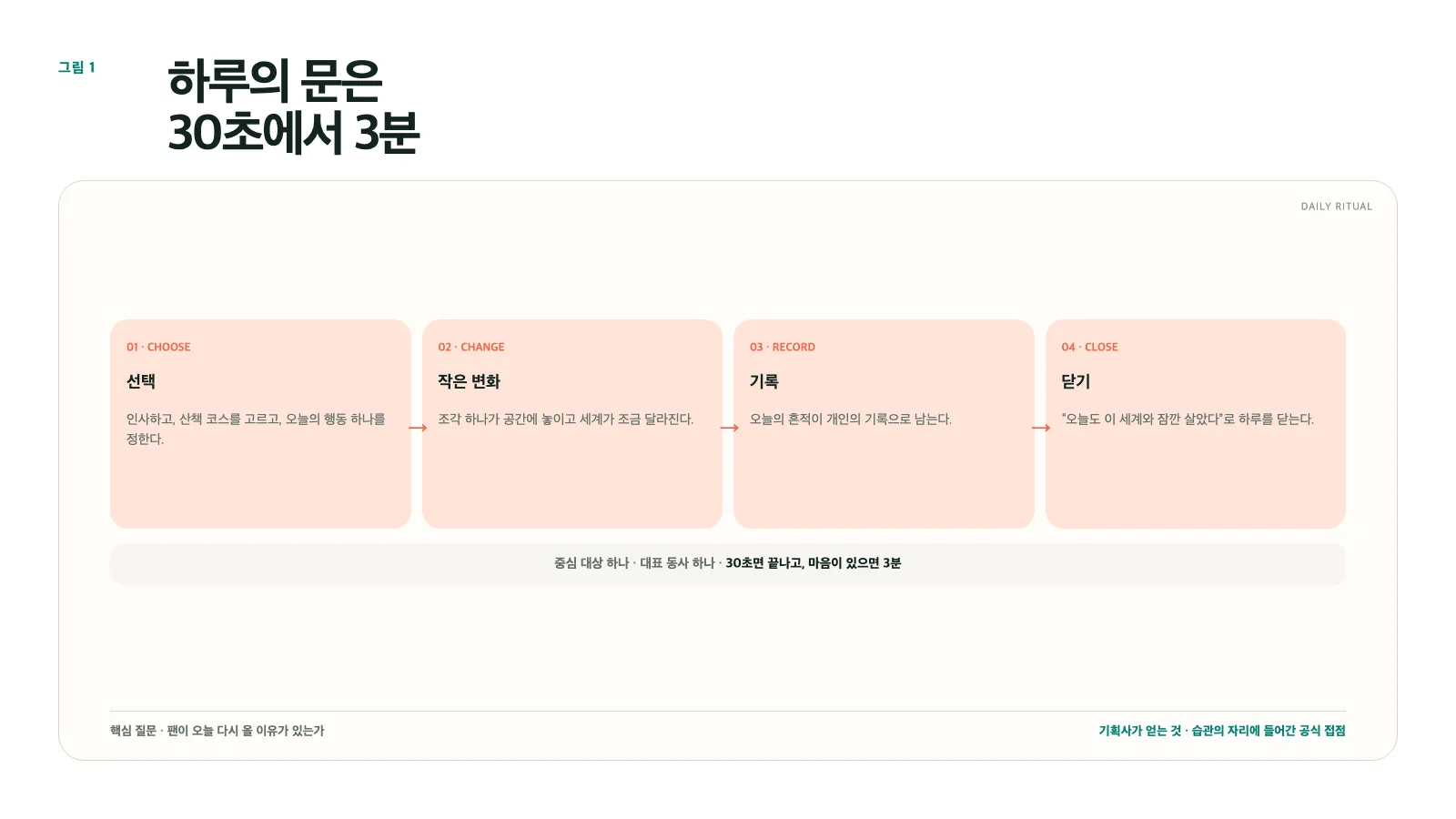
Figure 1. The daily ritual: choice → small change → record → close
2. No-Punishment: Nothing Happens When You Rest
The most important principle is no-punishment. Skipping a day does not make the character sick, does not lower a relationship score, does not pile up overdue homework. Nor is fans' affection tested with consecutive-attendance rewards. The devices of pressure the game industry has long relied on are deliberately removed.
The reason is ethics and strategy at once. Punishment lifts short-term logins but accumulates guilt, and when guilt crosses a threshold, the fan leaves not just the service but the relationship itself. Conversely, a world where resting costs nothing has a low threshold for coming back. The daily revisit average of 23 times and average daily time of 1 hour 2 minutes observed in our self-measured internal operations were numbers produced not by coercive devices but on top of no-punishment. These figures are, of course, targets and forecasts premised on the volatility of a hit-driven business, but the direction is clear. Lasting participation comes not from pressure but from reassurance.
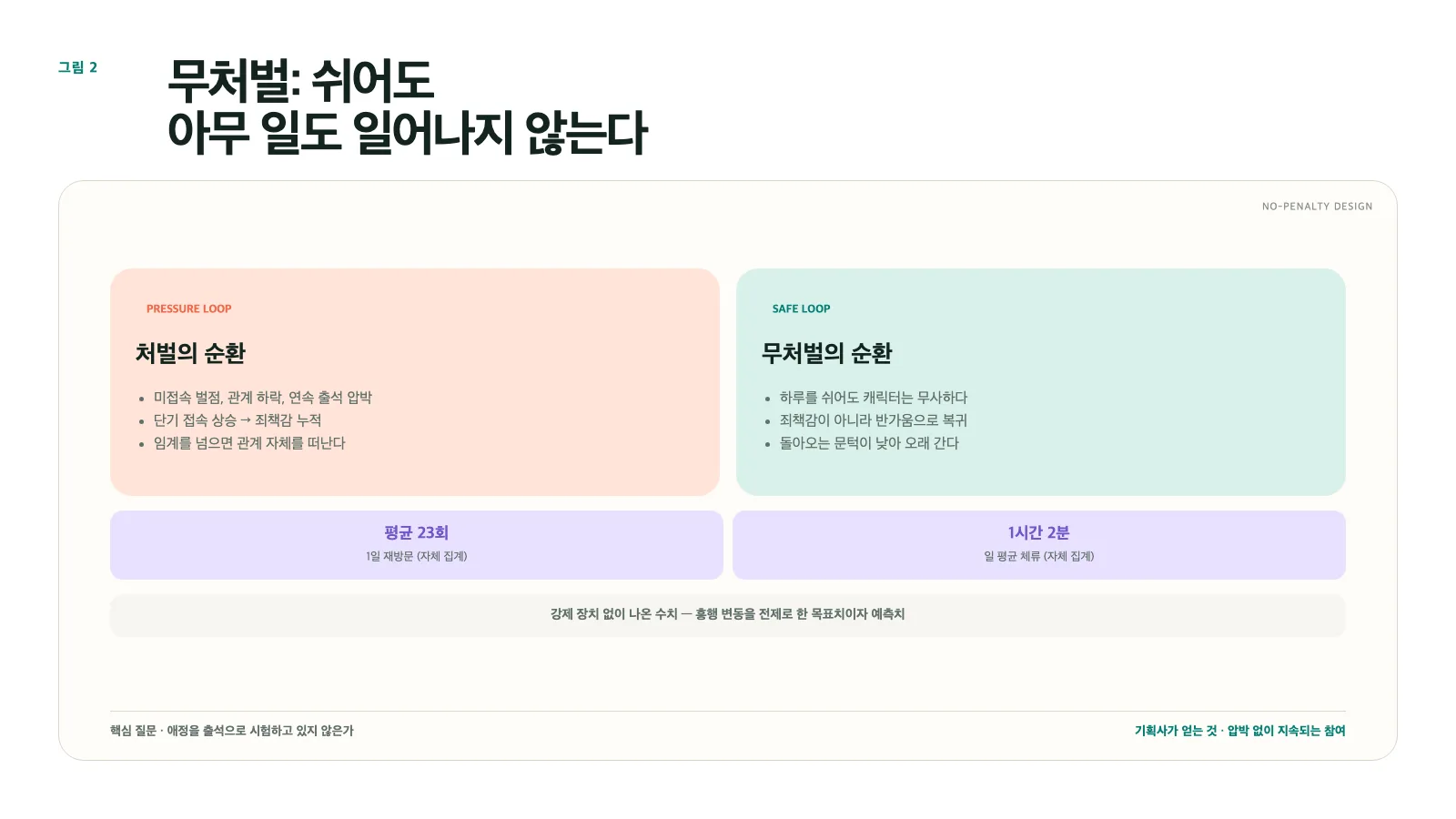
Figure 2. No-punishment design: break the cycle of guilt and the threshold of return drops
3. No Competition, No Penalty for Arriving Late
The principle paired with no-punishment is non-competition. No fandom rankings, no structures for member popularity votes, no letting spending amounts become a hierarchy. Competition inside a fandom produces short bursts of firepower but leaves long fatigue and conflict, and that fatigue ultimately lands on the artist.
The door for latecomers stays open too. A fan who arrives mid-season can catch up on the published narrative, and past collectibles can be met again in the archive without repetitive labor or extra payment. A fandom is a community continually joined by new fans; a structure in which "only those who were there from the beginning get the complete experience" is a design that filters out the world's future fans by itself.
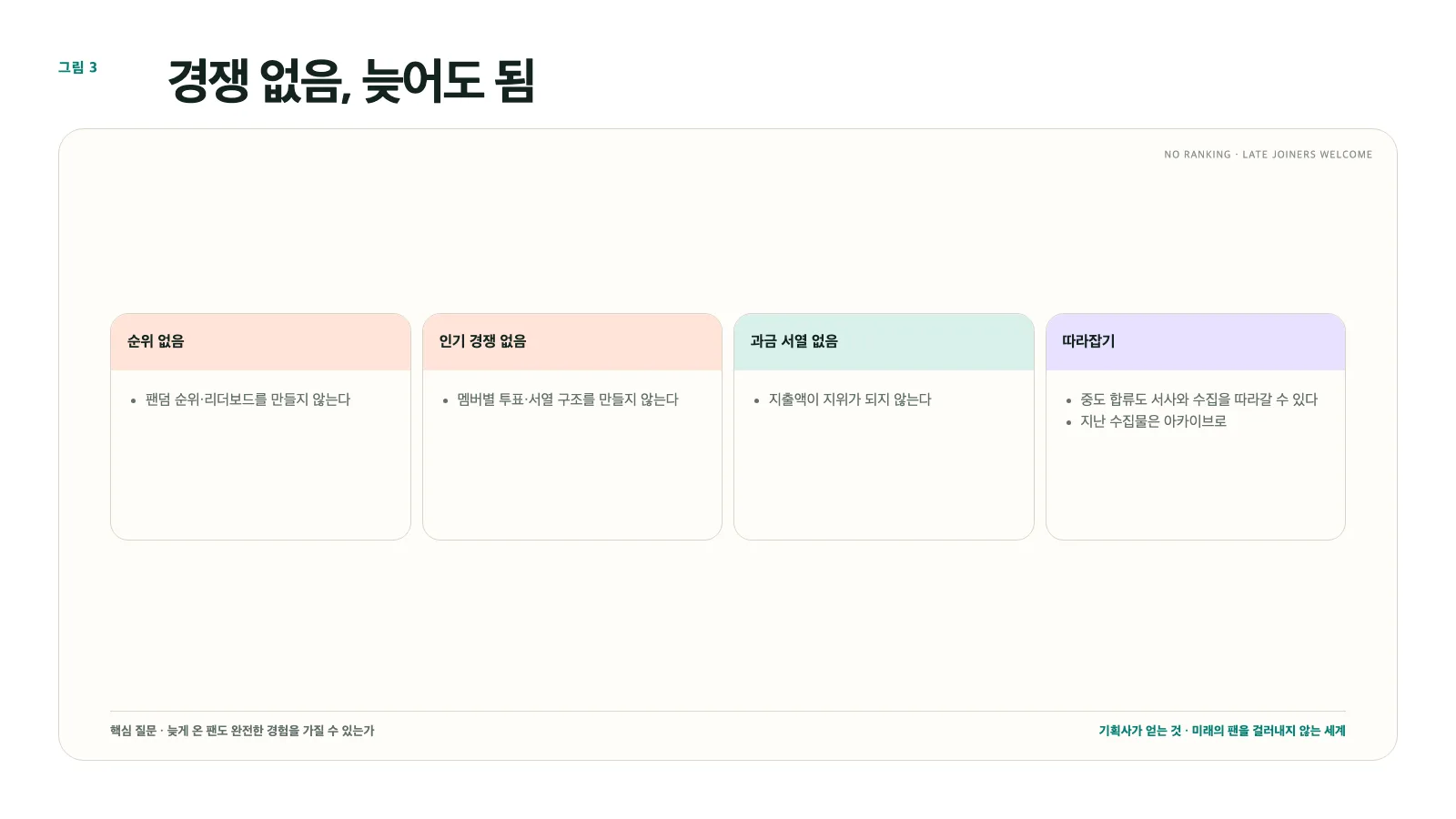
Figure 3. Non-competition and late-arrival access: a world that honors each fan's pace instead of rankings
4. Overlapping Clocks: Daily, Weekly, Biweekly, Monthly
The daily ritual alone makes 100 days monotonous. So clocks of different periods are layered. A weekly event and outfit or space update creates predictable talking points; the biweekly collectible gives participated time a lasting form; the monthly world expansion and communal event gives even fans who do not come every day a big reason to return. And the season as a whole wraps all these clocks as one arc with a beginning, change, and an ending.
The key is predictability. When a fan comes to know in her body the rhythm of "new outfits arrive on Wednesdays, and something big happens at month's end," content stops being a random supply and becomes a promise kept. It is not the technique of multiplying notifications but the operation of keeping promises that creates return visits.
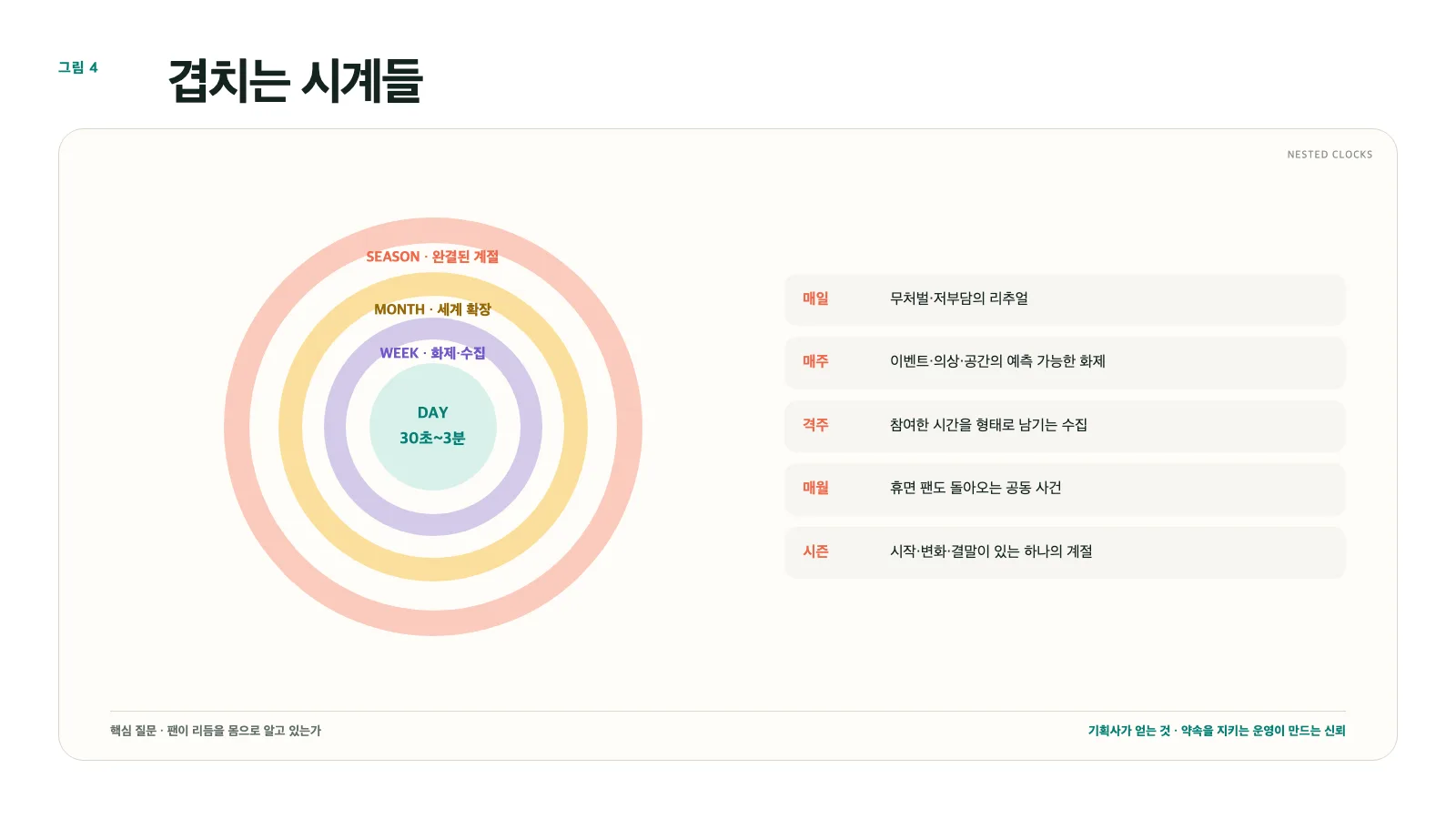
Figure 4. Nested daily, weekly, biweekly, and monthly clocks: a predictable rhythm becomes trust
5. How to Load Collecting and Decorating with Meaning
Collecting and decorating are an old grammar of fan service, but collection that just fills numbers in a catalog quickly becomes labor. A meaningful collectible meets three conditions. First, it has an origin. The group's stages, habits, symbols, and the fandom's language are translated into objects, giving the joy of recognition. Second, it changes the world. A single collectible actually alters the space's appearance, its function, or the personal record. Third, it becomes expression. The combination of a decorated space and a collection turns into a share card, the material with which a fan tells the community about her taste.
Then collecting becomes narrative rather than accumulation. A fan's 100 days remain as the landscape of a single room, and that landscape differs for every fan. What gets displayed and shared most returns to the company as empirical grounds for the next merchandise and character expansion.
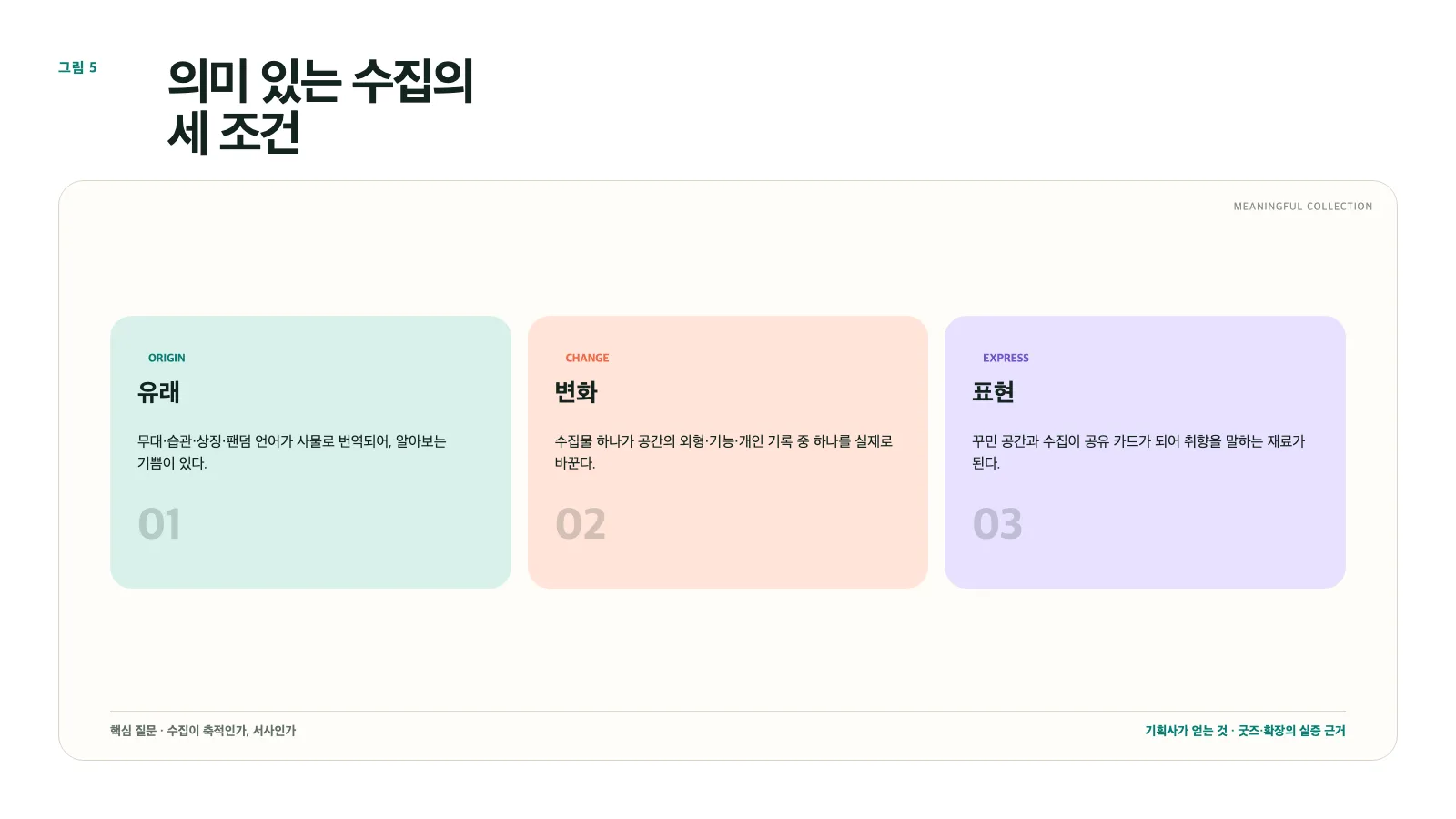
Figure 5. The three conditions of meaningful collecting: origin, change, expression
6. Individual Endings and the Shared Scene
Late in the season, individual records meet the fandom's communal event. Each fan's choices gather to enrich the shared landscape, and the scene the whole fandom leaves together becomes the season's climax. Here too there are principles. The communal goal does not fail, and the communal achievement does not block any individual's ending. A fan who participated little still has her own ending, and the contributions of the devoted shine within the shared scene.
It is a structure of confluence, not competition. "The scene we made together" is the narrative a fandom loves most, and its screenshots and testimonials warm the community all over again. Individual attachment and fandom belonging fulfilled at once in the same event — that is the goal of communal outcome design.
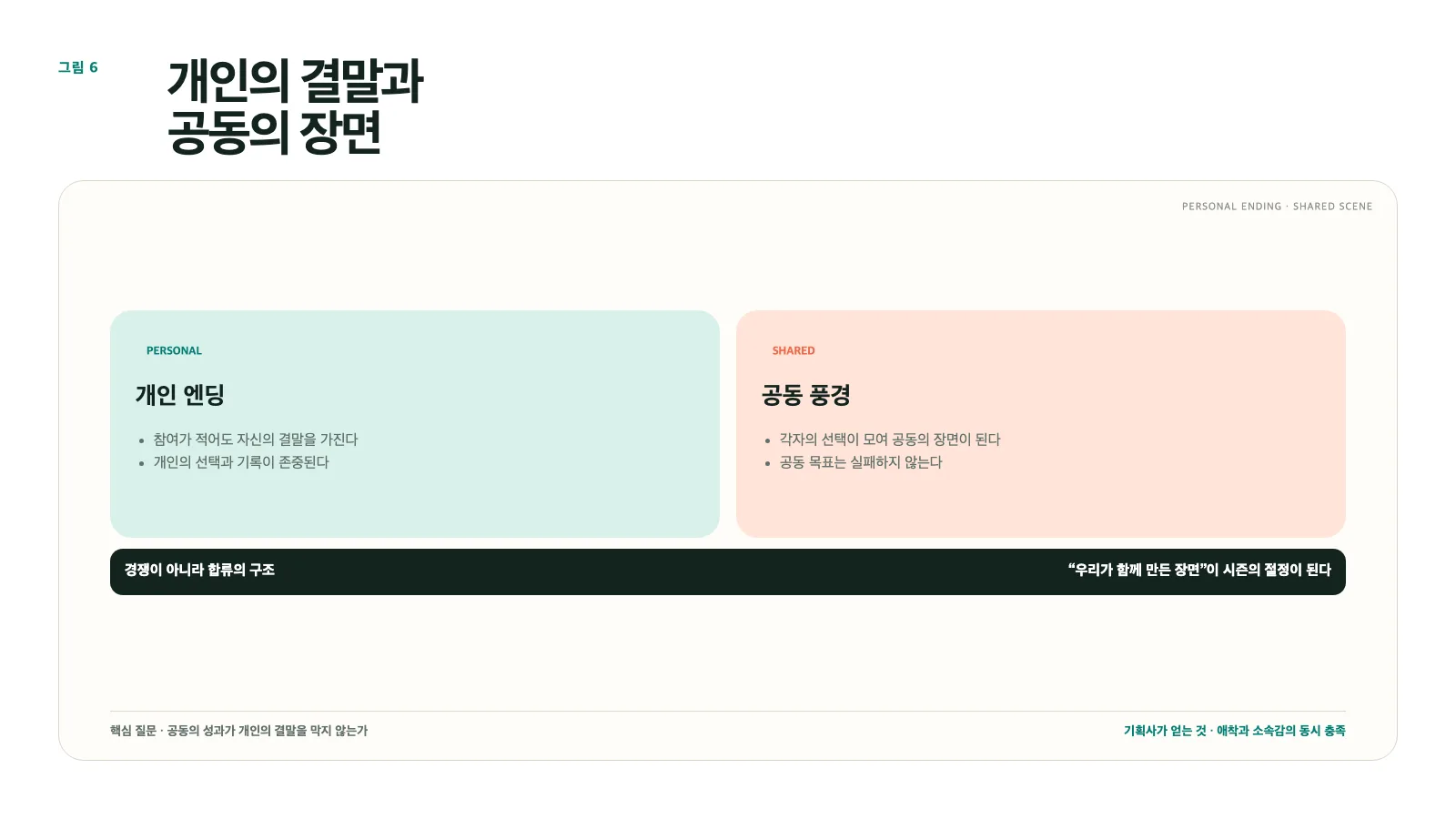
Figure 6. Individual endings and the shared landscape: the structure of a communal goal that cannot fail
7. The Finale Is Not an End but the Door to the Next Season
When the season of roughly 100 days ends, the finale opens. Individual records are compiled into an edition that remains, and the fandom's shared scenes become the season archive. Then, when the next album arrives, a new comeback capsule is loaded onto the same engine and the next season begins. For fans, the end of a season is not a loss but "wrapping up a season fully lived, and waiting for the next."
As this rhythm repeats, what accumulates for the company? Each season's content and resources, fan response data, and ever-faster production of the next season. The production system in the back that makes this accumulation possible — why a worldview must be a system, not a document — is the subject of the next installment, "A Worldview Is Not Content but a Production System."
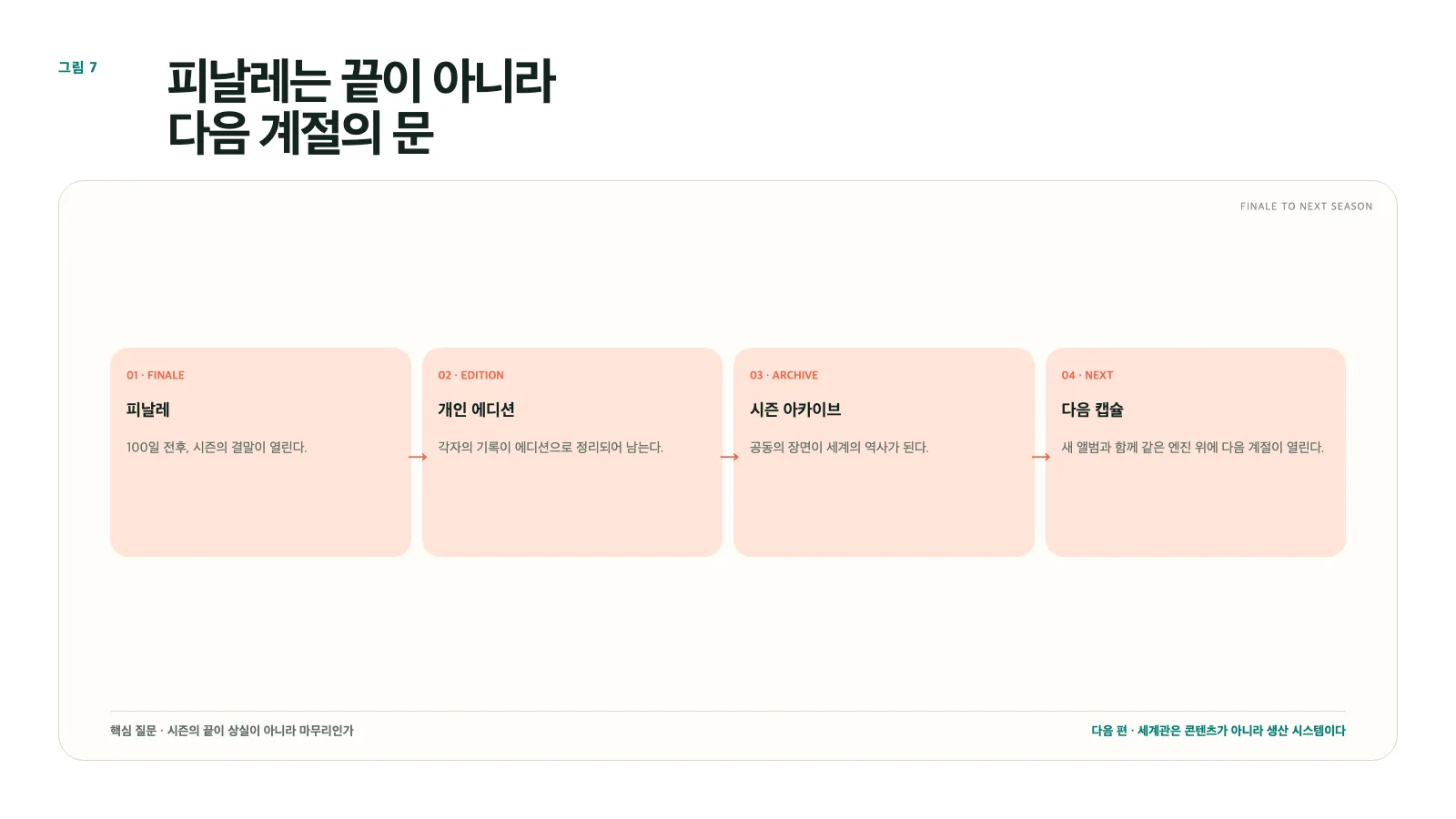
Figure 7. The season finale: the cycle of personal editions, the communal archive, and the next capsule
MEJE WORKS, the team writing this series, is a content team that designs and operates worldviews, characters, and Fandom Activity for idol IP. Fandom Activity is an operating system that turns idol IP into "a world fans live in every day," and this series is laying out the method piece by piece. Additional materials for collaboration review and on-site briefings are available on request at any time.